Why Europe’s Teenagers Are Taking to the Streets
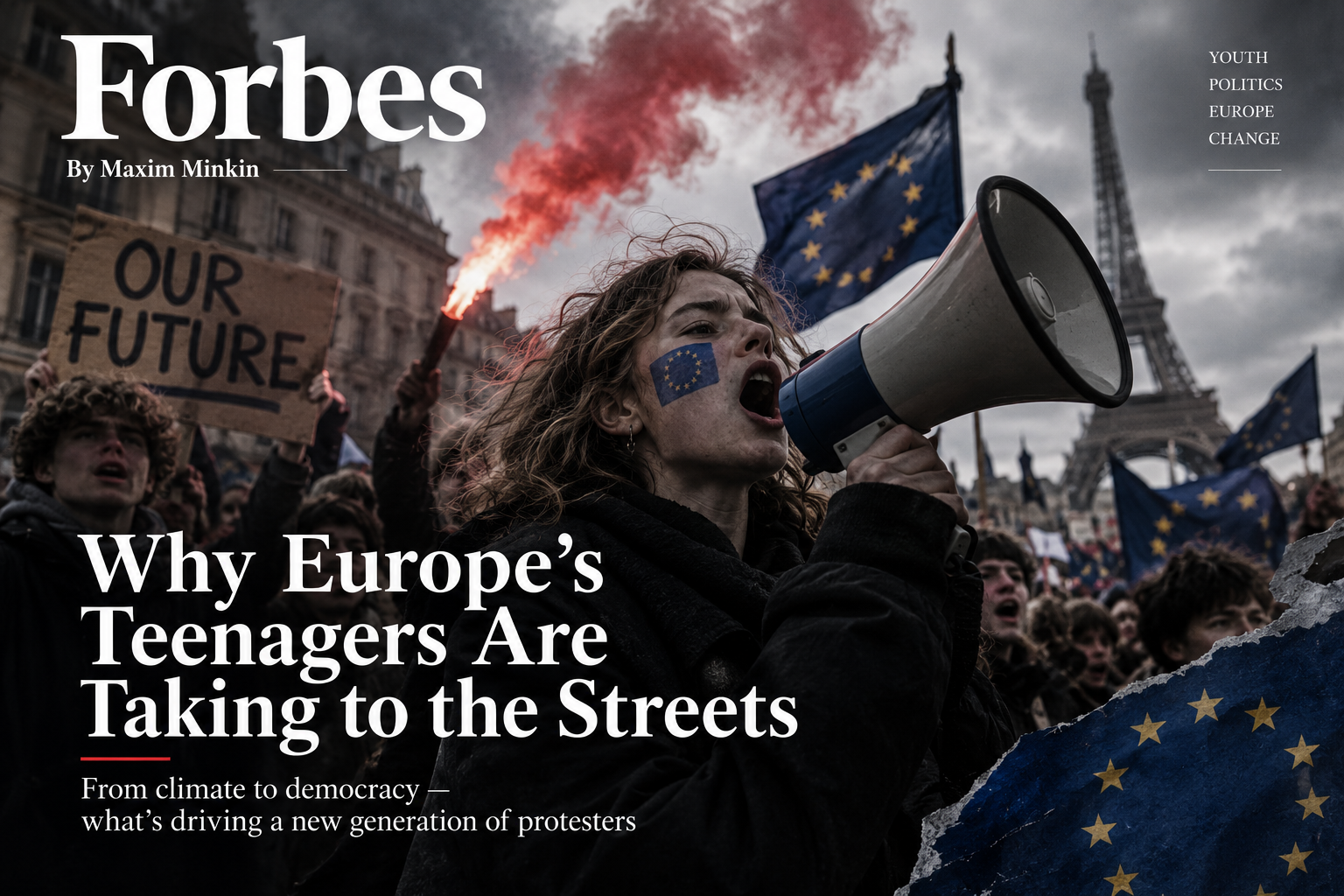
"They tell us to study, follow the rules and work hard if we want a better future," she said, pulling her black mask over her face. "But what future are they talking about? One where we can't afford a place to live? Where the planet keeps getting hotter? Or where we spend months working for free just to get a little experience?"
Eleni is far from alone in feeling this way. Across Europe, young people are increasingly taking to the streets to make their voices heard. From the Mediterranean to the Baltic, demonstrations have become a familiar sight. The immediate reasons differ from country to country: climate policies in Germany, housing shortages in Ireland, education cuts in France and concerns about civil liberties in Poland. Yet beneath these local issues lies a common frustration.
For many young Europeans, the future no longer looks like something to look forward to. Instead, it feels increasingly uncertain, expensive and out of reach.
The Social Contract Is No Longer Without
For generations, young Europeans grew up with a fairly simple expectation: get an education, find a decent job, work hard and eventually enjoy a more comfortable life than your parents did. It was never a guarantee, but it was an idea people could believe in.
That belief is now becoming harder to maintain.
Figures from Eurostat show that youth unemployment remains significantly higher than unemployment among the wider population, particularly in parts of southern Europe. But finding a job is only one part of the problem. Even those who manage to enter the labour market often face temporary contracts, low wages and unpredictable working conditions. The growing cost of housing, food and everyday expenses makes financial independence even more difficult.
"We're probably one of the most educated generations, but that doesn't mean we're getting better opportunities," says Marcus, a 19-year-old student organiser from Frankfurt. "Our parents could sometimes buy a house on one salary. We look at rent prices in Berlin or Amsterdam and realise that even sharing a flat might be our reality for years. It's hard to imagine building a stable life like that."
This gap between expectations and reality has changed how many young people view politics and protest. Demonstrating is no longer simply a way to express an opinion or support a particular cause. For some, it has become one of the few ways to draw attention to problems they feel are being ignored.
Different Problems, Similar Frustrations
Although economic uncertainty is a common concern, the reasons young people protest are not identical across Europe. Local circumstances matter, and the issues that dominate the streets often reflect the particular challenges of each country.
Housing and the cost of living: In Dublin, London and Stockholm, access to affordable housing has become a major concern. Young people worry that they will never be able to afford to live independently, let alone settle in the cities where they grew up. For some, the prospect of being forced to leave their hometowns is becoming a reality long before they reach adulthood.
Climate change: In Germany, France and Belgium, climate activism remains an important part of youth protest movements. Many young demonstrators have grown increasingly impatient with government promises that, in their view, have not been followed by meaningful action. Some have moved beyond traditional marches and are turning to more disruptive forms of civil disobedience to attract public attention.
Trust in institutions and civil rights: In countries such as Greece, Spain and Poland, protests have also focused on corruption, police conduct and concerns about democratic freedoms. In these cases, frustration goes beyond individual policies. It reflects a wider lack of confidence in the institutions expected to represent and protect citizens.
Despite these differences, the same underlying question keeps coming up: why should young people trust a system that seems unable to address the problems shaping their lives?
How Social Media Is Bringing Young Protesters Together
Today's youth movements also look quite different from the student protests of 1968 or the anti-austerity demonstrations of 2011. One major difference is how quickly information travels and how easily people can organise without relying on traditional political structures.
Student unions and established organisations still play a role, but they are no longer the only way to bring people together. Telegram groups, Instagram posts and TikTok videos can spread information about demonstrations within minutes. Footage from a protest in Paris can reach thousands of people in Madrid, Prague or Athens before the event has even ended.
Social media has also made it easier for young Europeans to recognise similarities in their experiences. A teenager in Prague may have little in common with someone living in Marseille on a personal level, but both might be worried about rent, insecure employment or the consequences of climate change.
They also share a digital culture built around memes, online discussions and a certain distrust of political messaging. National borders still matter, but they no longer prevent young activists from following one another's campaigns, exchanging ideas or finding common ground.
Of course, online solidarity does not automatically translate into lasting political cooperation. Digital movements can lose momentum just as quickly as they gain it. Still, social media has changed the scale and speed at which youth-led protests can develop.
Government Are Struggling to Respond
European governments have not always known how to deal with this growing frustration. In some cases, officials have dismissed young demonstrators as inexperienced or overly emotional. In others, governments have responded with stricter restrictions on protests or created youth advisory groups that critics argue have little influence over actual policy.
The problem is that treating these demonstrations as temporary expressions of teenage frustration misses what is happening underneath. Many of the concerns being raised are not exclusive to young people. Housing affordability, insecure employment and climate policy affect entire societies, even if younger generations are likely to experience their consequences for longer.
There is also a political risk in allowing this frustration to go unanswered. When mainstream political parties fail to offer convincing solutions, some young people begin looking elsewhere. This can mean joining grassroots organisations or movements on the left, while others become attracted to populist groups and far-right parties that promise simple answers to complicated problems.
The reasons behind these political shifts vary, and not every protester shares the same ideology. What connects many of them is a growing sense that established political institutions are not listening.
A Generation That Refuses To Wait
As midnight approached in Athens, the crowd slowly began to disperse. The shouting faded, leaving behind discarded banners, empty bottles and graffiti on the walls. By morning, the streets would look almost normal again.
But the frustration that brought people there would not disappear overnight.
The protests taking place across Europe are unlikely to be explained away as a passing phase or a burst of youthful rebellion. They reflect deeper concerns about whether young people can afford a home, find secure employment and live in a world where their future feels reasonably predictable.
There is no single policy that can solve all these problems. Governments will have to deal with housing shortages, improve access to stable work, address climate concerns and rebuild public trust. More importantly, young people need to see that their participation in political life can lead to something beyond promises and carefully worded statements.
For Eleni and many others, waiting patiently for things to improve is becoming increasingly difficult. They have spent years being told that their future depends on the choices they make today. Now they are asking a question of their own: what happens when the opportunities they were promised simply aren't there?
And until someone provides a convincing answer, the protests are unlikely to stop.