Russia Is Losing Up to 500 Rural Schools a Year
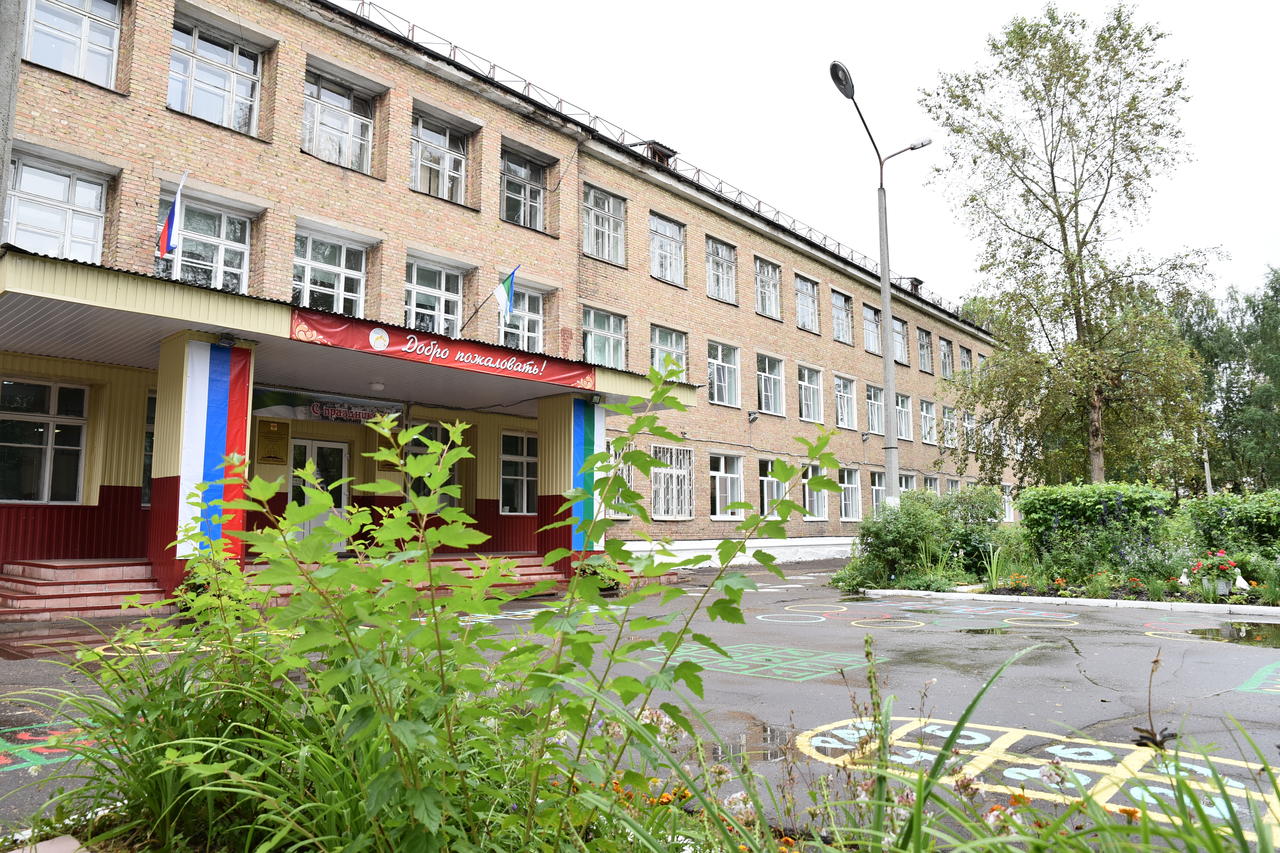
In a Russian village, a school is rarely just a school.
It is where children spend their days, where teachers build their careers, where parents meet and where generations of the same families often pass through the same corridors.
Now, hundreds of those schools are disappearing.
Up to 500 rural schools are closing in Russia every year, according to figures reported by Izvestia based on regional education data from Russia’s Ministry of Education. In the 2024/25 academic year alone, the number of rural schools fell by about 400, leaving roughly 21,100 operating across the country.
The figure is not simply a story about buildings being emptied.
It is a story about what happens to the communities around them.
When the school disappears
The reasons behind the closures are not difficult to understand.
Russia’s rural population has been shrinking for years. Some villages have only a handful of school-age children, while local authorities face the cost of maintaining buildings, paying teachers and keeping infrastructure running for relatively small numbers of students.
From an administrative perspective, closing a school can look like an economic calculation.
For families, it can be something else entirely.
Children may have to travel to another settlement by school bus. A journey that once took minutes can become an hour or more. Younger pupils may have to leave home earlier and return later, while extracurricular activities become harder to attend.
And there is a broader consequence.
When a village loses its school, young families can lose one of the reasons to stay.
A decline measured in thousands
The current wave is part of a much longer trend.
Russia had more than 45,000 rural schools in 2000. By 2024, that number had fallen to roughly 21,500, according to statistical data cited by RTVI. The number fell again during 2024/25, to about 21,100.
In total, approximately 900 rural schools disappeared between 2022 and 2024, according to calculations based on Ministry of Education reports.
The decline is not evenly distributed.
Saratov Region alone lost 50 rural schools over the latest year covered by the data. Bashkortostan lost 25, while Mordovia lost 14. Tatarstan and Dagestan also recorded significant declines.
Behind every number is a building that once had a timetable, a teachers’ room and a morning bell.
The teacher shortage
Schools are also losing something else: teachers.
Between 2016 and 2024, the number of teachers working in Russian rural schools fell by 9.7%, according to figures cited by Izvestia. Young teachers are particularly scarce. Only 11.1% of rural teachers are under 30, compared with 16.7% in urban schools.
The problem feeds itself.
Fewer children mean fewer classes. Fewer classes make it harder to justify a full school. Fewer teachers make small schools increasingly difficult to operate.
Eventually, the school becomes a number on a budget spreadsheet.
Then the doors close.
Not every closure looks like a closure
In some communities, the process is less straightforward than simply announcing that a school will shut down.
Schools can be reorganized, merged or turned into branches of larger institutions before eventually being eliminated.
RTVI reported in December 2025 that almost 400 rural schools had disappeared during that year and documented cases in which schools were reorganized into “buildings” or branches before facing closure.
For residents, the terminology matters less than the result.
The children still have to go somewhere.
The teachers still have to find work.
And the village still has to live without its school.
The school as the heart of a village
In some Russian villages, there may be little infrastructure left besides a shop, a medical point, a community centre and a school.
Take away the school, and the village does not simply lose classrooms.
It loses one of the few places where people regularly gather.
This is why some parents and teachers have fought against closures, even when their schools have only a few dozen pupils.
Their argument is not necessarily that a tiny school is cheaper or more efficient.
It is that efficiency is not the only measure of a community’s future.
A school can employ local people. It can keep children nearby. It can give young families a reason to remain. It can preserve local traditions and, in some regions, minority languages and cultural heritage.
When it disappears, those functions do not automatically move with the school bus.
The demographic trap
Russia is facing a difficult cycle in its countryside.
Population decline creates smaller schools.
Smaller schools become more expensive per pupil.
Schools are closed or consolidated.
Families then have fewer reasons to remain.
The population declines further.
And the next school becomes harder to justify.
This is the paradox at the centre of Russia’s rural education problem.
The government can save money by closing a school today.
But if the closure accelerates the departure of families tomorrow, the demographic cost can be much harder to reverse.
A modern school system with an old problem
The situation is also more complicated than a simple story of Russia abandoning education.
The country has invested heavily in building and renovating schools, particularly in larger population centres. Modern facilities, new classrooms and major renovation programs are changing education in many Russian cities.
But a new school in a growing urban district does little for a village where there are no longer enough children to fill a classroom.
Russia is therefore experiencing two education stories at once.
One is about investment and modernization.
The other is about emptying classrooms in places where the population itself is shrinking.
What 500 really means
“Five hundred schools” sounds like a statistic.
But statistics have a habit of hiding the human story.
Five hundred schools can mean thousands of children travelling farther every morning.
It can mean hundreds of teachers losing the institution where they expected to spend their careers.
It can mean parents reconsidering whether to remain in a village.
And in some places, it can mean one more public building becoming empty in a community that already has too many.
The question is therefore not simply how many rural schools Russia will have next year.
It is what Russia’s villages will look like when those schools are gone.
Because when a school closes, the last bell may not only be ringing for a class.
It may be ringing for the community around it.