Beyond Comfort: Why Luxury Hotels Are Investing in Culinary Experiences
In the premium hospitality market, fine dining is becoming a competitive tool in its own right. Hotels are bringing in Michelin-starred chefs, hosting culinary residencies and creating events available for only a few days at a time. On October 24, Michelin-starred chef and Michelin Green Star recipient Rico Birndt will host a special dinner at JW Marriott Maldives Resort & Spa. His residency offers a useful case study in why hotels are investing in temporary culinary projects — and what value they can generate beyond restaurant revenue.
In the luxury hospitality market, competing on comfort alone is becoming increasingly difficult. Spacious villas, private pools, spa facilities, multiple restaurants and personalized service remain essential attributes of a premium resort, but they are increasingly less effective as lasting points of differentiation.
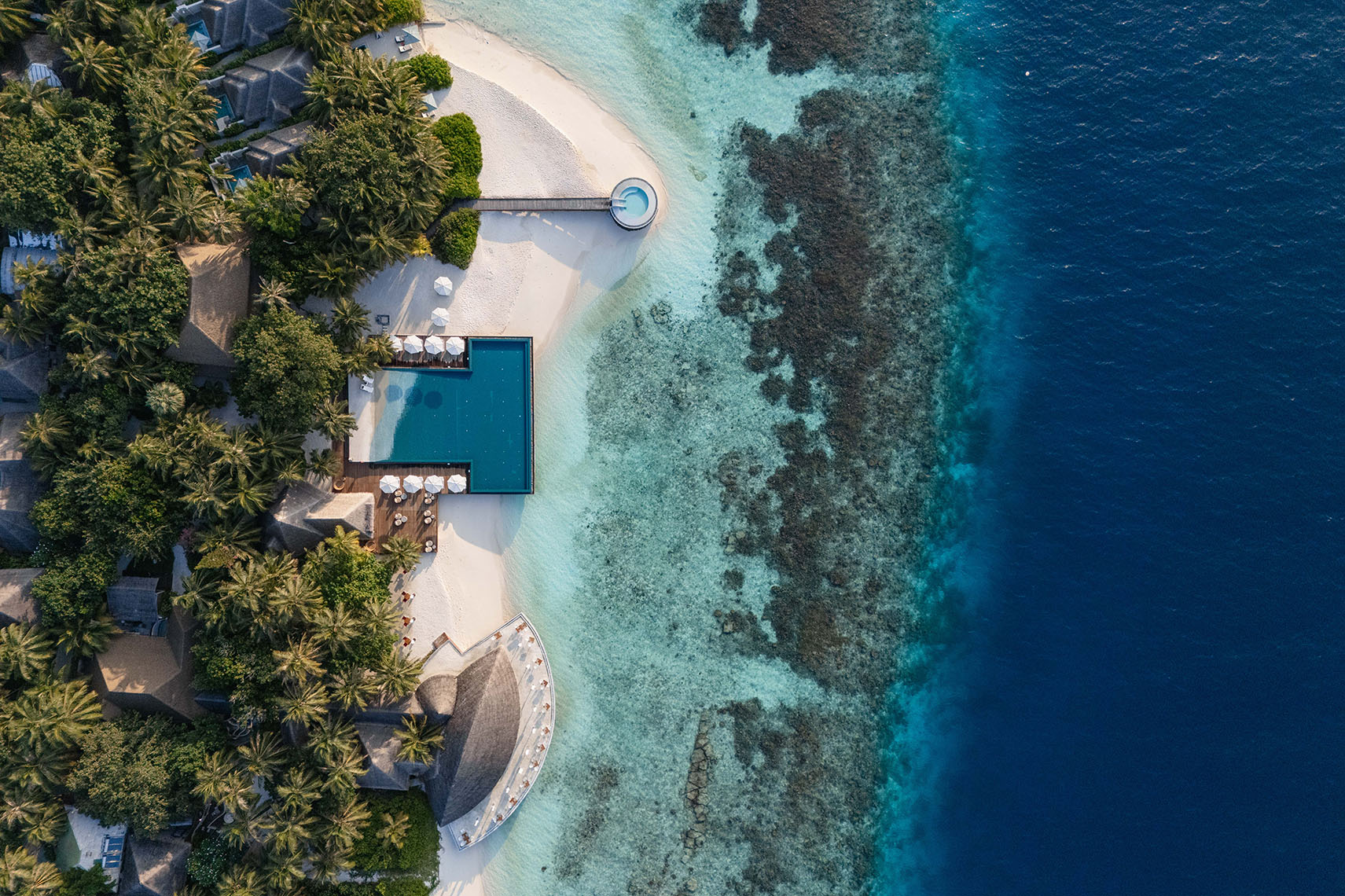
This is particularly evident in the Maldives, where many high-end resorts operate within a broadly similar model: a private island, overwater and beachfront villas, several dining concepts, wellness facilities and an in-house program of activities. The physical product still matters, but most of its components can ultimately be replicated. A new restaurant can be opened, a villa renovated and a design concept refreshed, while successful architectural ideas tend to become market standards over time.
As a result, competition is gradually moving beyond infrastructure. Hotels need not only to provide an exceptional setting but also to continually create new reasons for travelers to choose a particular resort — and, increasingly, particular dates.
Culinary residencies, collaborations and special dinners by visiting chefs have become one way of doing this.
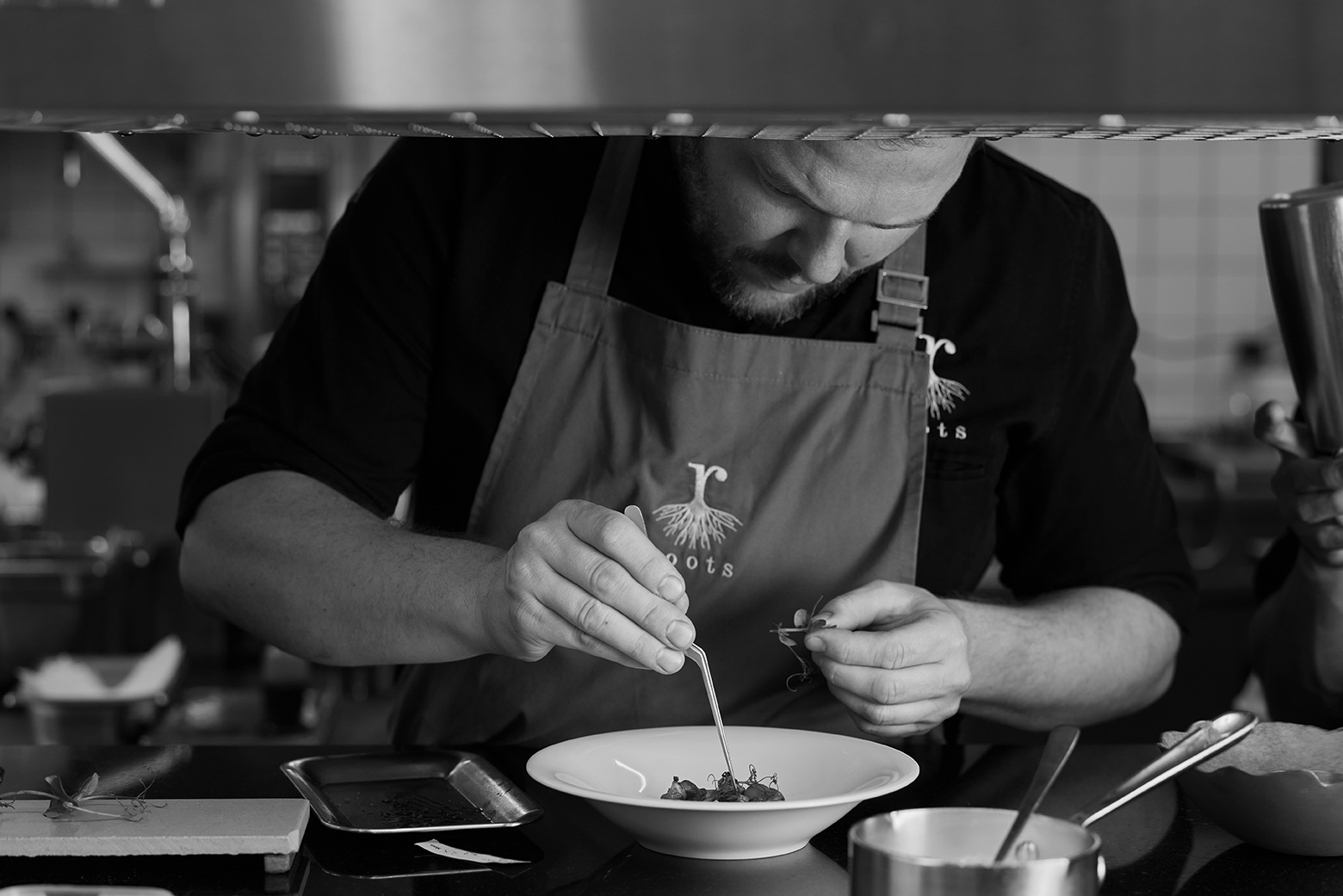
On October 24, 2026, JW Marriott Maldives Resort & Spa will welcome German chef Rico Birndt, owner of June restaurant on Lake Chiemsee. The restaurant holds a Michelin star as well as a Michelin Green Star for its environmentally responsible approach to gastronomy. In the Maldives, Birndt will present his concept for the first time, adapting it to local ingredients and a tropical setting.
For the hotel business, however, the significance of such projects extends far beyond a single dinner.
When a Restaurant Becomes a Reason to Travel
At an urban hotel, the restaurant remains one option among many. Guests may spend most of their time outside the property and make little use of its dining facilities. An island resort operates according to a different model.
In the Maldives, a significant part of the journey takes place within a single property. Guests are not simply booking a room; they are effectively choosing the environment in which they will spend several days or even weeks. The quality of the restaurants, spa, water activities and events therefore has a direct impact on the perceived value of the entire stay.
Within this model, food and beverage is no longer merely a supporting function. A restaurant can become an independent element of a resort’s positioning, while a culinary event can provide an additional reason to choose one property over another at a comparable price and service level.
There is another advantage: gastronomy can be refreshed far more easily than physical infrastructure. A resort cannot rebuild its room inventory every season, but it can change its culinary program several times a year. A visiting chef, a special menu or a short-term residency can create a different experience within the same hotel infrastructure.
This becomes particularly important when dealing with repeat guests. It is difficult to sell the same villa for a second or third time as a new experience. It is much easier to offer a new reason to return.
Investment in gastronomy, therefore, is not simply restaurant expenditure. For a luxury hotel, it can become a way of continually refreshing the product without continually reinvesting in the physical property.
How a Chef’s Reputation Works for a Hotel Brand
Bringing in a renowned chef can address several business objectives at once.
The first is reputational. An internationally recognized chef arrives with an established professional track record, an existing audience and external validation of their expertise. Michelin, in this context, remains one of the most widely understood markers of restaurant quality among an international premium audience.
The second is communications. Opening another restaurant within a resort does not necessarily create a compelling story beyond the property itself. A residency by a prominent chef, limited to specific dates, gives a hotel an opportunity to communicate beyond the familiar language of villas, beaches and spas.
Finally, the format creates scarcity. A permanent restaurant can be visited next month or during a future holiday. A dinner by a visiting chef exists only on a particular date.
For the luxury segment, this is increasingly important. As affluent consumers gain access to an ever-growing range of high-quality hotels and restaurants, access itself becomes less distinctive. Time-limited experiences restore an element of exclusivity.
A temporary residency also requires a different level of commitment from the hotel than opening a permanent celebrity-chef restaurant. The property does not need to restructure its entire F&B operation around an external brand. Instead, for a limited period, it gains a new product, outside expertise and a communications opportunity.
At JW Marriott Maldives Resort & Spa, Rico Birndt will provide exactly that.
How Fine Dining Adapts to Geography
Birndt’s cuisine is based on principles closely tied to the place where ingredients originate.
His restaurant June, located on Lake Chiemsee, offers a contemporary interpretation of regional cuisine built around seasonality, fermentation, local produce and the ambition to use ingredients as fully as possible. Herbs and vegetables are grown at the restaurant, while house-made miso, sauces and various ageing techniques allow flavor to be developed not only through the raw ingredient itself but also through time and technique.
This approach has earned June both a Michelin star and a Michelin Green Star, the guide’s distinction for restaurants recognized for their sustainability practices.
But moving such a concept to another continent creates an obvious contradiction. If a cuisine is built around locality, it cannot simply be exported together with the chef.
The Maldives has a different ecosystem, climate, product availability and, crucially, a very different supply chain. The residency therefore becomes less about recreating June on a tropical island and more about adapting Birndt’s methods to a new culinary environment.
For the dinner, the chef will work with ingredients including edible flowers and tropical herbs grown in JW Garden, the resort’s own garden.
The six-course menu will combine produce from the Indian Ocean with techniques characteristic of Birndt’s cooking. Announced dishes include Maldivian lobster with smoked butter and garden flowers, trevally sashimi with house-made soy sauce and ginger, roasted sea bass with a saffron and egg-yolk sauce, followed by fermented passion fruit sorbet with a signature syrup.
The dinner will take place at Kaashi, the resort’s restaurant set above the treetops. Birndt will personally introduce the courses, discussing the origins of the ingredients and the techniques used to prepare them.
What is being sold, therefore, is no longer simply a six-course menu. The provenance of the food, the limited nature of the event and direct interaction with its creator all become part of the value proposition.
Local Produce in the Economics of an Island Resort
Luxury restaurants’ growing interest in local ingredients is often explained by changing consumer preferences. In an island hospitality business, however, there is also a more pragmatic consideration.
Operating a restaurant on a remote island requires a complex supply system. A significant proportion of ingredients must be brought in from elsewhere, with transportation, storage and temperature control all carefully managed. The longer the supply chain, the more variables affect cost, quality and potential food waste.
An on-site garden cannot make a large luxury resort self-sufficient, and its economic impact should not be overstated. It can, however, provide certain herbs, greens, vegetables and edible flowers directly on the island, shortening individual links in the supply chain.
At the same time, the perceived value of the ingredient itself changes.
For decades, one hallmark of luxury service was the ability to provide almost any ingredient regardless of geography: European produce in Asia, Japanese ingredients at an island resort, or tropical produce in a European restaurant. Global logistics made fine dining increasingly independent of place.
Part of the restaurant industry is now moving in the opposite direction. Provenance and a product’s relationship with a particular location are becoming sources of value in their own right.
For hotels, this creates an opportunity to combine operational and marketing functions. The kitchen gains access to fresh produce, while the guest receives a clear story about where that produce came from. The important distinction is ensuring that “local” does not remain merely a communications device.
When Sustainability Becomes Part of the Restaurant Model
This is where another aspect of Birndt’s philosophy becomes relevant: sustainability.
The Michelin Green Star reflects a broader shift within fine dining. Professional discussion is moving beyond flavor, presentation and technique to include sourcing, seasonality, food waste and the organization of restaurant operations.
For a hotel, however, the issue is more complex than it is for a standalone restaurant.
A handful of ingredients grown on the property does not in itself make a resort’s dining operation sustainable. The environmental footprint of an island property is also shaped by supply chains, packaging, refrigeration, energy consumption, water use, transportation and food waste.
What matters, therefore, is not the number of individual sustainability initiatives but whether relevant practices can be integrated into the kitchen’s daily operations.
Fermentation, for example, can extend the usable life of certain ingredients. Using more of each product can reduce waste. In-house preparation gives kitchens greater control over raw materials. Using ingredients available locally can reduce dependence on selected imported products.
What may be presented as culinary philosophy in an independent restaurant can, at hotel scale, also become a question of logistics, cost control and waste management.
This is where a culinary residency can potentially generate value beyond the meals served during the event. It can also facilitate an exchange of expertise between a visiting chef and the hotel’s permanent culinary team.
Why Selling the Room Is No Longer Enough
The rise of culinary residencies reflects a broader shift in the hospitality business.
Securing a booking is only the first objective. Once the guest arrives, a resort is also competing for how that person spends their time, which additional services they choose and, ultimately, whether they decide to return.
The physical product remains relatively static. A villa, pool or spa must operate for years to justify the investment behind it. The content of a stay can change much more quickly.
Chef residencies, special dining programs, wellness projects, art residencies and other temporary events allow resorts to continually create new scenarios within the same infrastructure.
This changes the way the hotel product itself is conceived. A resort is no longer simply a space to be filled with guests; it becomes a platform whose content can be programmed throughout the year.
The model is particularly relevant to repeat business. Architecture, location and service may be sufficient to sell the first visit. Subsequent visits require additional reasons to return.
A culinary event provides a relatively flexible way to create them: it is tied to specific dates, can be designed for a limited audience and does not require major capital expenditure on the property.
How Do You Measure the Value of a Single Dinner?
Rico Birndt’s culinary residency at JW Marriott Maldives Resort & Spa will end after one evening on October 24. Measuring its impact solely by the number of seats sold, however, would provide only part of the picture.
For a hotel, such projects can create value on several levels.
The direct effect comes from restaurant revenue and additional guest spending. The indirect effect lies in the ability to stimulate demand for specific dates, strengthen the resort’s culinary positioning and offer a new product to returning guests. There is also a communications benefit: a visiting chef provides an independent news hook and allows the property to reach audiences beyond the traditional travel segment.
Finally, there can be an internal business impact. Working alongside an external chef exposes the permanent team to new techniques and processes, some of which may remain in use long after the residency ends.
“Modern luxury is about a genuine connection to the land. Applying my approach to fermentation and local produce in an environment like this island allows us to create original dishes using local ingredients and to surprise and delight our guests,” says Rico Birndt.
Of course, a single Michelin-starred dinner cannot transform the economics of a large resort. Like any event-driven offering, it makes sense only as part of a broader strategy — when gastronomy is genuinely integrated into the property’s positioning rather than used as a one-off communications exercise.
Yet the growing interest in such formats among luxury hotels points to a broader shift in where competition at the top end of the market is heading.
A villa, pool, spa and high level of service remain essential, but they are no longer sufficient on their own. As physical infrastructure becomes increasingly difficult to make truly distinctive, hotels are investing more heavily in what can be continuously renewed: gastronomy, events, visiting experts and the content of the guest experience.
The central question for the hospitality business is therefore no longer simply “Why should a guest choose our hotel?” It is increasingly “What should be happening here right now to make them choose these particular dates?”