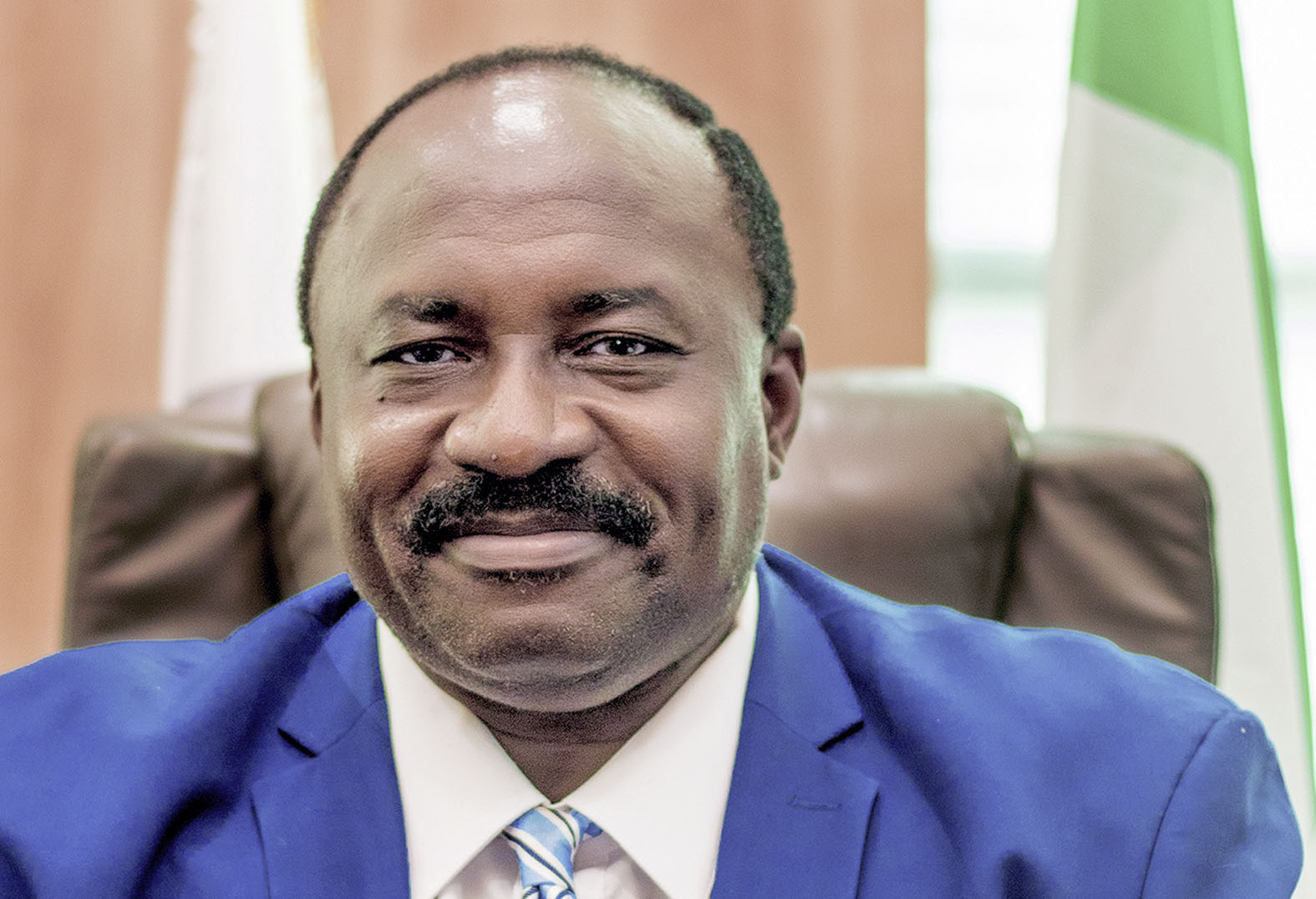
Energy Security Anchored In Vision, Strategy, And Transparency
Overseeing midstream and downstream petroleum operations with clear policies on licensing, pricing, safety, and investment frameworks.
“Energy security is all-encompassing, because without it, other sectors like agriculture, industry, and production cannot operate optimally, so it remains our number one priority.” – Engr. Farouk Ahmed, CEO of NMDPRA
The Nigerian Midstream and Downstream Petroleum Regulatory Authority (NMDPRA) is a revolutionary force in Nigeria’s ever-changing energy sector.
To regulate midstream and downstream petroleum operations, the NMDPRA, established by the Petroleum Industry Act of 2021, merged three previous organizations into a single entity. It has been influencing an industry that is more open, effective, and investor-friendly since its operations began in October 2021.
At the helm of this change is Engr Farouk Ahmed, the CEO of NMDPRA. Speaking with conviction about the bold reforms the agency has enacted, Ahmed says, “Our mandate is very clear. We exist to unlock the full value of our hydrocarbons and gas resources to help propel the nation to a one trillion-dollar economy by 2030”.
One of NMDPRA’s most significant milestones has been the management of fuel subsidy removal, a long-debated policy in Nigeria. Ahmed calls the move “a bold decision taken by our president from day one” that has energized the market.
“We ensured there was no disruption in supply, no crisis, no strikes,” he says. “It was properly managed, freeing up government funds and opening the market to competition and efficiency.”
The benefits are evident: increased supply, fewer fuel queues, and prices falling from ₦1,400 (US$0.91) to between ₦850 (US$0.55) and ₦900 (US$0.59) per liter as market forces stabilize. This liberalized market has also sparked renewed investor interest in midstream and downstream infrastructure.
“We are now seeing more applications for modular refineries, more active refineries, and more investment coming into the sector,” Ahmed says.
Today, there are five active refineries. NMDPRA has issued 47 Licence-to-Establish and 31 Licence-to- Construct permits, alongside the landmark Dangote Refinery, which processes 650,000 barrels per day. Nigeria is now on course to become a net exporter of petroleum products.
The Industry Sustainability Initiative (ISI), a bold strategy aimed at luring US$575 billion in investments over the next 35 years, lies at the heart of the Authority’s agenda. In order to achieve our net-zero goals by 2060, Ahmed defines ISI as “a development plan that integrates low-carbon energy sources into the value chain, ensures energy security, and drives sustainability.”
To give investors the confidence to commit capital, NMDPRA established the Midstream and Downstream Gas Infrastructure Fund (MDGIF).
“The law created the MDGIF to de-risk investments,” Ahmed says. “We can co-finance projects by taking on 20 to 35% of the investment cost to encourage participation. Once the project gains traction, we step back, allowing the private sector to take over.”
The authority also organizes monthly roundtables where regulators and investors engage directly, fostering trust and transparency.
Looking forward, energy security sits at the heart of the authority’s five-year strategic plan.
“Energy security is all-encompassing,” Ahmed says. “It underpins every other sector of the economy. Without reliable energy, agriculture, the manufacturing industry, and production cannot operate optimally. Ensuring this security is our top priority.”
The authority is also committed to digitization, which Ahmed sees as vital for efficiency. “We are driving towards full digitalization to reduce waste and lower costs,” he says.
Gas is another critical focus area. Nigeria’s proven reserves exceed 210 trillion cubic feet, yet much remains untapped. NMDPRA is playing a central role in the government’s “Decade of Gas” initiative, which promotes gas-to-power projects, and gas-based industries like fertilizers, petrochemicals, and Compressed Natural Gas (CNG) for transportation.
“We’re working to change the mindset of Nigerians to use more gas,” Ahmed says.
In particular, he believes that CNG is a game-changer since it is far less expensive than gasoline, costing only ₦230 (US$0.15) per liter as opposed to ₦900 (US$0.59) per liter. Nigeria’s youthful, tech-savvy population further strengthens the investment case.
Environmental sustainability is integrated throughout NMDPRA’s regulatory approach. “We are committed to protecting the environment while promoting industrial growth,” Ahmed says.
The authority is creating a strong data environment to monitor the flow of gas and petroleum through pipelines, trucks, barges, and terminals in order to enhance supervision and promote transparency.