Strategic Readiness For A Changing Security And Economic Landscape
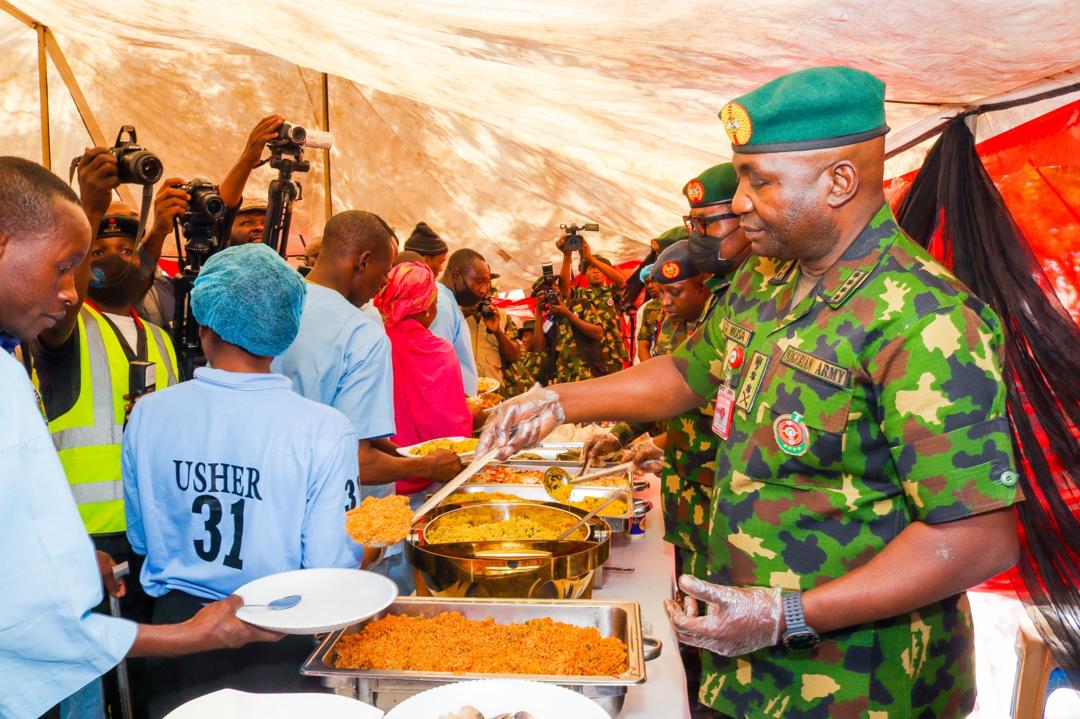
Coordinating three service branches, enhancing training, and advancing technology to address evolving security and regional stability priorities.
“We have to prepare for the future, because the future will be entirely different from before.” General Christopher Gwabin Musa, Chief of Defence Staff at the Ministry of Defence
General Christopher Gwabin Musa speaks about Nigeria’s Armed Forces, and there is a clarity of mission that stands out. Appointed Chief of Defence Staff in 2023, he brings decades of experience, a career that has spanned both domestic operations and international missions, and a perspective that blends tradition with forward-looking reform.
Born in Sokoto, Musa entered military service in 1986 and has served at virtually every level of command.
“I have had the opportunity to serve both within and outside Nigeria,” Musa says, describing a career shaped by operational and academic military courses. “That experience has given me a wider view of the challenges we face and the solutions needed for the future.”
His years of service have included commanding troops in the field, strategic planning roles, and multiple deployments that have shaped his understanding of security in Nigeria’s diverse regions.
Today, as the highest-ranking military officer in the country, Musa’s mandate is to coordinate the Nigerian Army, Navy, and Air Force while advising the president on all military matters. His approach is centered on cohesion, professionalism, and adaptability in an evolving security environment.
He places particular importance on ensuring that all branches operate in harmony, which he believes is vital for operational success.
A priority since taking office has been bringing Nigeria’s military services into closer alignment. Musa stresses that collaboration has been key.
“In the past, there were situations where services were not working together as a team,” he says. “We have worked hard to ensure the Army, Navy, Air Force, and even the paramilitary agencies like the police and customs collaborate as one.”
This approach has created stronger lines of communication and more effective joint operations, which in turn strengthen the Armed Forces’ capacity to respond to both domestic and international challenges.
This philosophy extends beyond the armed forces. Musa emphasizes that citizens are active partners in national security.
“Every Nigerian has a role to play,” he says. “Modern security threats involve the community, so we encourage everyone to be engaged and to limit the freedom of movement for criminal actors.”
Musa believes that open dialogue and cooperation between citizens and the military are one of the strongest tools for ensuring security, as they build trust and help create a safer environment for all.
For Musa, readiness starts with training. “In the military, training is critical in everything we do,” he says.
From entry at the Nigerian Defence Academy to promotion to senior ranks, continuous assessment is the standard. Training is not simply a requirement for advancement, but a way of life that ensures officers and soldiers are prepared for every scenario.
Every officer and soldier is required to attend career-linked courses before advancing to the next rank.
“This system has kept us professional,” Musa says.
The emphasis on preparation also applies to operational readiness, with personnel trained in everything from traditional warfare to non-combat roles, such as disaster relief, humanitarian assistance, and infrastructure support.
“Our training prepares us to carry out our core mission, while also being able to assist the nation in other areas when needed,” he says.
These capabilities reflect a broader understanding of the Armed Forces’ constitutional role, which includes territorial defense as well as support for internal security.
“The nature of our training prepares us to assist in a wide range of areas without affecting our primary mission,” Musa says. This adaptability has helped the Armed Forces meet Nigeria’s diverse security needs, from border protection to emergency response.
Nigeria’s contributions to peacekeeping in Africa and beyond remain a point of pride for the Defence Chief. Musa currently chairs the ECOWAS Committee of Chiefs of Defence Staff, reflecting Nigeria’s leadership in regional stability. His role involves close coordination with other West African nations, ensuring that collaborative security measures are effective and timely.
“Nigeria has always played a key role in West African peacekeeping,” Musa says. “We were in Liberia, Sierra Leone, Congo, Yugoslavia, and many other operations.”
These missions have strengthened the Armed Forces’ capabilities and reinforced Nigeria’s diplomatic position in the region. Musa points out that these experiences benefit Nigeria’s military directly, as they enhance operational expertise and cement relationships with partner nations that are valuable in addressing regional challenges.
Among Musa’s most ambitious projects is the Invictus Center being constructed in Giri, near Abuja. Musa sees the project as both a practical facility and a symbolic statement of support for those who have served.
“The morale of our troops is influenced by how we treat those who are injured and the families of those who have lost loved ones,” Musa says.
“Through the Invictus Center, we are showing that there are opportunities for those injured in service to recover, compete, and thrive.”
The center will feature medical and psychological support services, training spaces, and facilities designed to encourage physical recovery and emotional well-being.
The facility will include treatment for physical injuries, post-traumatic stress disorder, and other long-term care needs.
“We have a 13-month timeline for completion,” Musa says, adding that the project has drawn contributions from retired officers and other supporters.
By creating an environment where injured personnel feel valued and supported, the Invictus Center aims to strengthen morale across the Armed Forces.
The center is expected to serve as both a medical and morale resource, with international opportunities for participation in adaptive sports and rehabilitation programs. Musa has seen firsthand how transformative such initiatives can be.
“Those who participated abroad returned with renewed confidence,” he says. “It has shown them that their service still matters, and their future is still bright.”
Looking ahead, Musa is candid about the changing nature of military operations. “The future will be shaped by artificial intelligence, drones, and cyber capabilities,” he says. “We must adapt our training, strategy, and tactics to these realities.”
Preparing for the next era of defense means developing skills and systems that address emerging threats before they escalate.
International collaboration will remain a key part of this adaptation. The Armed Forces engage in officer exchanges, joint exercises, and training partnerships with other nations.
“These exchanges keep our forces competitive on a global scale,” Musa says. The sharing of knowledge and expertise ensures that the Nigerian Armed Forces remain current with the latest developments in defense strategy and technology.
While his role is military in nature, Musa does not miss opportunities to speak positively about Nigeria’s broader potential. With a population of over 200 million and abundant resources, Nigeria offers opportunities in sectors ranging from entertainment to agriculture.
“It is a great country,” Musa says. “Nigeria is blessed with diversity, natural resources, and a dynamic youth population. We have a climate that allows production year-round, a rich cultural heritage, and hospitality that visitors always remember.”
These qualities make the country attractive not only as a strategic partner but also as a location for investment and tourism.
He encourages international visitors and investors to experience the country themselves.
“Do not rely only on what you hear in the media,” Musa says. “When you come to Nigeria, you will see the reality for yourself, and it is a welcoming place.”
Musa’s vision for the Armed Forces over the next five to 10 years is one of modernization, deeper collaboration, and continued professionalism. The Armed Forces will remain a pillar of regional stability and a partner in domestic development. He emphasizes that success will continue to rest on the quality of its personnel and their ability to adapt to evolving challenges.
“We will keep improving training, building capacity, and maintaining partnerships,” Musa says.
In closing, Musa returns to a theme he raised at the beginning of the conversation: the importance of sharing accurate stories about Nigeria. “It is important to change the narrative,” he says. “The reality of Nigeria is different from the perception some may have. It is a place of opportunity, talent, and resilience.”