Pod Power: Taolagnaro In Madagascar, Where Vanilla Is More Than A Flavor
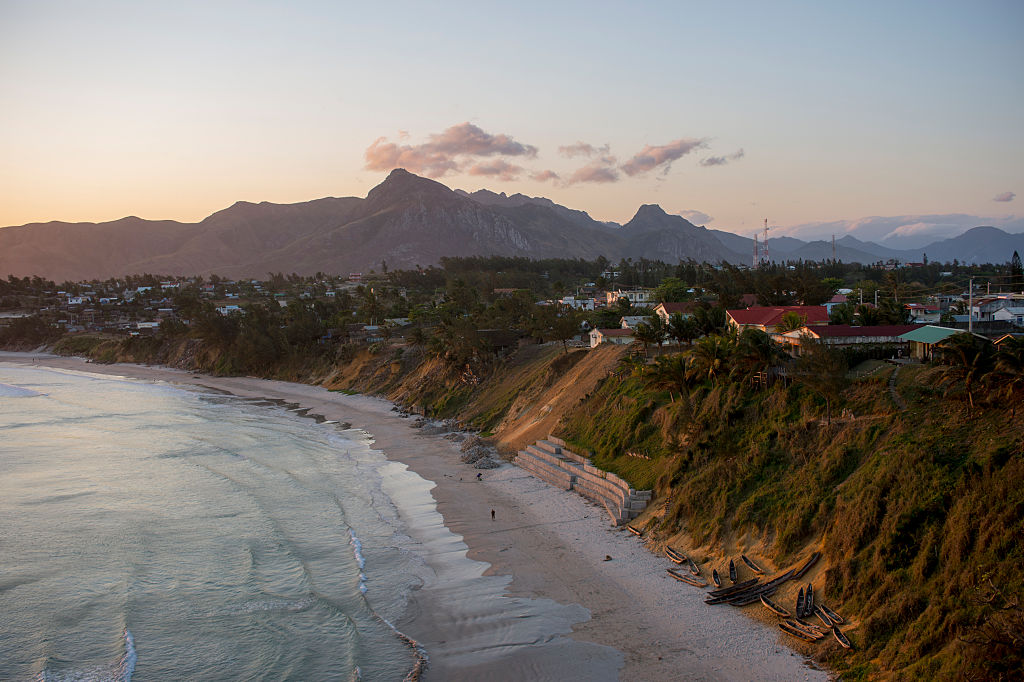
Madagascar’s calling card to the world may be vanilla, but Taolagnaro, on its southeastern tip, draws in visitors with its unassuming charm and startlingly beautiful sea.
The first time I arrived in Taolagnaro, it was quiet.
My mother and I slipped into town early, before the day had properly announced itself. The sea was already awake. Waves crashed rhythmically against the shore, loud enough to drown out thought, steady enough to feel reassuring. We wandered briefly, disappeared into a bathroom stop, re-emerged, and left again. Some places don’t demand much ceremony when you meet them for the first time.
The second arrival could not have been more different.
By midday, Taolagnaro was hosting a spectacle. Our ship released its passengers into a neat, improbable queue of tuk-tuks, 20 or more, lined up nose to tail. The convoy crawled over the sandy streets, tourists from all over the world compressed into small three-wheeled vehicles, while locals lined the pavements waving, laughing, pointing. Children ran alongside us. For once, the tourists weren’t sightseeing–we were the attraction.
Taolagnaro, formerly known as Fort Dauphin, has historically mattered more than its size suggests. Perched on Madagascar’s southeastern tip, it was strategically important long before cruise ships appeared on the horizon, first as a trading post, later as a colonial foothold, a place where sea routes, power, and ambition converged. Today, it functions as a regional hub: a port town, a gateway, modest but outward-looking.
Our first tuk-tuk stop was the old fort, a remnant of the French colonial settlement. Madagascar spent more than half a century under French rule, and Taolagnaro still carries that history lightly, like a memory that refuses to fade completely. The fort itself is weathered and understated, overlooking the sea it once guarded.
Inside is a small museum. A local guide spoke about history–French arrivals, Malagasy resistance, shifting power–but I’ll be honest: little of it stuck. What I do remember are the photographs. Early black-and-white portraits of local chiefs and their wives stared out from the walls, posed carefully, meeting the camera with a seriousness that suggested they knew they were being recorded for posterity. These were not anonymous faces. They were people who had mattered here long before the tuk-tuks learned to queue.
Then, the rain arrived.
As we piled back into the tuk-tuks, plastic sheets were hurriedly pulled down over the sides; coverings designed more for intention than effectiveness. We got wetter under cover than we would have without it. Outside, people walked calmly through the rain, unbothered, while we fumbled with flaps and laughter inside.
At a local bar by the sea–part café, part gathering place–we drank fresh coconut water, the coconuts hacked open on the spot. It felt less like a purchase and more like permission to pause. The ocean was startlingly beautiful; that particular blue that makes you briefly forget how uneven the world can be.
Everywhere, people offered vanilla–Madagascar’s calling card to the world. Small packets, carefully wrapped, held up with hopeful smiles. Vanilla is more than a flavor here; it is a livelihood, export and an identity. From these pods come the scents and tastes that travel far further than most of the people selling them ever will.
Prices were named in Madagascan ariary. Payment, however, required euros. The result was a small economic ballet: tourists searching for local currency to spend the equivalent of loose change; shopkeepers patiently explaining rules they did not invent. To buy a simple snack, one had to exchange money twice, a process whose administrative effort far outweighed the value of the biscuit. Global tourism, it turns out, often arrives faster than practical systems can keep up.
There was also asking. For money. For help. For attention. Conversations rarely moved beyond that first exchange. We brushed up against one another–visitors and locals–without quite meeting. Two worlds passing closely, briefly, politely.
And then, just like that, it was time to leave. As the tuk-tuks began their slow procession back to the ship, there were more smiles, more waves. The town watched us just as it had welcomed us–curious, cheerful, unperturbed. As the ship pulled away, Taolagnaro shrank back into itself, the parade over, the spectators dispersing.