How Misfits Market Went From Selling Ugly Produce To Becoming The Amazon Prime Of Perishable Food
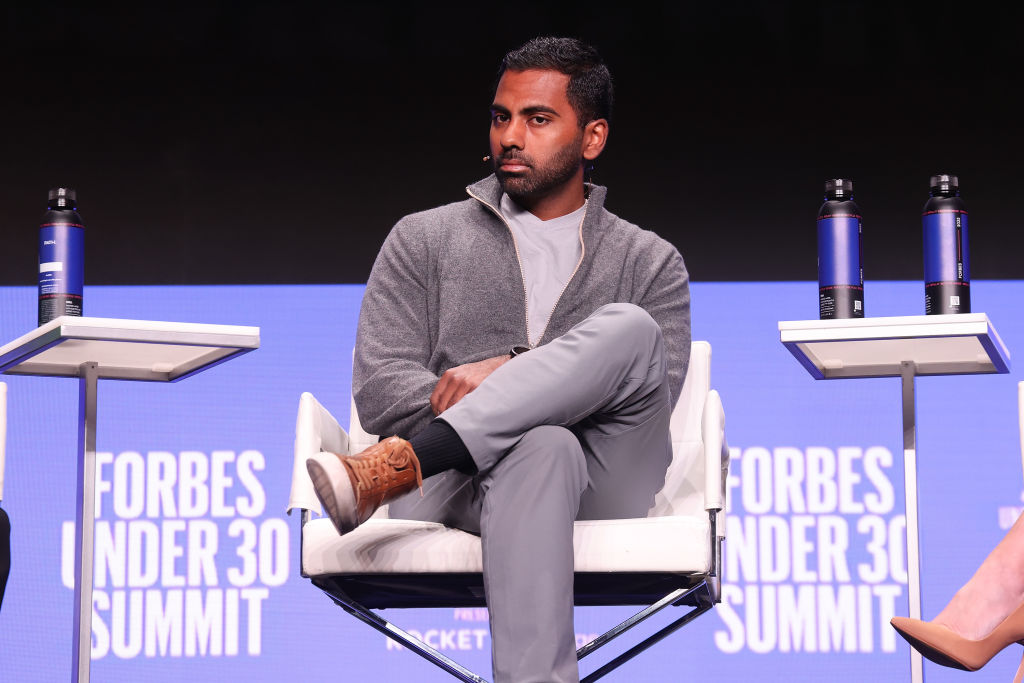
Abhi Ramesh’s grocery delivery startup has grown to $500 million in annual sales as he continues to reimagine how Americans shop for food.
This story was first published on Forbes.com
t’s zero degrees inside Misfits Market’s Baltimore warehouse as founder and CEO Abhi Ramesh passes by pallets of frozen pizza, chicken wings and ice cream stacked high on the walls. From the frozen section, Ramesh moves onto the main floor as forklifts crisscross past two assembly lines where subscribers’ boxes are being filled. A highly optimized algorithm decides the order of packing based on dozens of metrics, including size, weight and temperature of the food, how often an item is purchased and even weather at its final destination.
“All the boxes go down this chain,” says Ramesh. “The order is not at all random. It’s a very scientific process.”
The 33-year-old grocery entrepreneur claims this system is one of only a few nationwide that can ship customized boxes of food to anyone’s doorstep with room-temperature, chilled, and frozen items all in the same order. This feat as well as Misfits’ burgeoning fulfillment business for other brands is why Ramesh dreams of becoming the Amazon of perishable food—or at least the Amazon Prime—though he knows he has a long way to go.
“Amazon has built infrastructure for e-commerce and there’s so many different ways of monetizing it,” says Ramesh. “That philosophy has always been in the back of my mind—if we can build the best perishable [food] infrastructure in the country, we can monetize it in a lot of different ways.”
So far, Ramesh, who was named to Forbes 30 Under 30 social entrepreneurs list in 2020, has grown Misfits into a business with $500 million in annual revenue, with $45 million of that from Fulfilled by Misfits. Roughly $50 million comes from selling the ugly produce that Ramesh founded the business on in 2018 and another $50 million is generated by Misfits’ in-house brand, Odds & Ends. But these days, the vast majority is from regular grocery sales.
Fulfillment has become the fastest-growing part of Misfits and its gross profit margins are the strongest, too. That’s helped pad Misfits’ overall gross margins, which ended 2025 at over 40%, compared to typically around 20% for conventional grocery chains. Misfits Market is making more gross margin than traditional grocery chains, as well as publicly traded marketplaces such as pet food website Chewy, which has 30% gross margins and is the most similar publicly traded business to Misfits because it’s an online marketplace that does home delivery for perishable and non-perishable items. Not only that, but Misfits’ customers are also still saving more money—between 10% and 50%—than if they shopped in their neighborhood supermarket.
“He’s going to win,” Starbucks’ billionaire founder Howard Schultz says of Ramesh. “There’s no doubt in my mind that Misfits is going to be a multibillion-dollar leader.”
Ramesh says few entrepreneurs are competing with him to fix the grocery industry, and, in that, he’s learned a surprising lesson: “Low-margin businesses are good to build businesses in,” he says. “The hard businesses are the ones no one goes after because no one can make it work. So there’s no innovation, and it’s easier to break in and turn it on its head. And if you’re able to figure it out, there’s a much bigger prize at the end.”
Ramesh’s ultimate goal, he says, is taking Misfits public, like Instacart and DoorDash. Misfits hasn’t raised any outside equity capital from investors since 2021, when its Series C secured $225 million at a valuation of $2 billion. In all, Misfits had raised $525 million in equity capital and $65 million of debt from existing investors. Based on current market conditions, which have dropped in the past few years, Forbes estimates that Misfits could have a market valuation closer to $1 billion (though Misfits says if it raised again, the valuation would be higher than $2 billion). And as Misfits’ single largest individual shareholder with an estimated 20% stake, Ramesh is worth at least $200 million.
Much like Amazon’s early years, Misfits is not yet profitable and he’s “fine trading short-term profitability for healthy growth.” But Ramesh is investing for the long-term (Misfits manages a fleet of 350 refrigerated and freezer trucks) and continuing to push the company to new places (it also works with third-parties to sell curated boxes for diabetes or cancer patients, utilizing preventative care money for produce and protein purchases, totaling $6 million in sales in 2025).
Starbucks’ billionaire founder Howard Schultz, who has been an advisor since the early days of Misfits, says Ramesh has “the rare skill base of being an operator, a young, tech savvy executive and with the eye of a merchant.”
“He’s going to win. He’s just that kind of person,” says Schultz. “There’s no doubt in my mind that Misfits is going to be a multibillion-dollar leader.”
After leaving his hometown of Chennai, India at six months old, Ramesh and his software engineer parents moved to Bahrain. Two years later, the family lived in Dubai. They left again for St. Louis, Missouri and then finally Atlanta. He studied at the University of Pennsylvania’s Wharton school and then went to work for Apollo Global Management. As an analyst, one of the companies he covered was in cold storage, and he learned that if a truck is late for a delivery, even if only a few hours behind schedule, the orders are often scrapped, and the perishable food is dumped.
After leaving Apollo to start a coding bootcamp business with two friends, Ramesh kept thinking about the inefficiencies of the food industry. To study the problem, he spent several months talking to farmers to understand just how pervasive and damaging food waste is.
In 2018, Ramesh started “just saying yes to some of them and buying the produce.” He stored boxes of discarded apples and other misshapen produce in his Philadelphia apartment and decided to sell a mystery box as a test case.
With produce sitting in his apartment, Ramesh coded Misfits’ website and he bought some Facebook ads offering ugly-but-still-good produce at a 30% or even 40% discount to grocery store prices. Within 10 days of the website going live, Ramesh had 500 pre-orders.
To get the produce out of his living room, he rented a warehouse without refrigeration and then went to Costco to purchase two industrial-sized refrigerators, maxing out his credit cards along the way.
He quickly got investors interested. “We were buying produce so much cheaper because of the misfit angle,” Ramesh recalls. “There was this cost efficiency that translated through the financials.” In 2019, investors including San Francisco-based Greenoaks Capital Partners poured in $16.5 million. By the time Ramesh landed a spot on the 30 Under 30 social entrepreneurs list at the end of the year, Misfits had helped rescue more than 10 million pounds of food.
The business was still only a little over a year into operating when the pandemic hit, and orders flooded in—up 400%. It overwhelmed the business, so much so that Ramesh had to shut down Misfits’ waitlist between April and May 2020. He even stopped advertising on Facebook.
By the end of the year, Misfits’ sales had jumped 352% to over $160 million annually. Ramesh also raised an $85 million in a Series B round in June 2020 from Valor Equity Partners in Chicago, as well as Greenoaks, Third Kind Venture Capital, Alarko Ventures and Sound Ventures.
Sales continued to boom as the pandemic persisted into 2021. Sales grew a total of nearly 40% that year to a total of $223 million. With all the hype, Ramesh raised two rounds of financing in quick succession—$200 million in April 2021 and another $225 million in September 2021.
But then “the hangover” kicked in, he says. As vaccines rolled out, Americans shifted from eating every meal at home to getting back to restaurants. Order sizes dropped and some members fell off. Misfits launched a loyalty program and its Odds & Ends brand, and total sales grew but at a more muted pace of 32% in 2022.
“We got used to this crazy high demand. We built up all this infrastructure,” Ramesh says. “And then, naturally, once the lockdowns went away, it was a rapid reversion to the mean.”
But Ramesh knows that success isn’t linear. “If, as an entrepreneur, you get demotivated and fatigued by the downs, you’re going to get trapped and then tap out,” he says.
Which is exactly what happened to the competition. By mid-2022, California-based Imperfect Foods (whose cofounder Ben Chesler made the 30 Under 30 Food and Drink list two years before Ramesh) was about to run out of money. Imperfect had raised a total of $315 million, had 1,800 workers, a fleet of 450 trucks and three warehouses.
Misfits ended up acquiring Imperfect in an all-stock deal in late 2022, and Ramesh didn’t shy away from adopting practices from Imperfect that worked better. Imperfect did its own delivery, for example, while Misfits had been using FedEx and UPS. The shift led to improved quality, fewer refunds and higher retention. “Better control of the experience is actually worth the additional cost of that infrastructure,” Ramesh says.
And Misfits adopted Imperfect’s leased warehouses, including Imperfect’s 92,000 square foot warehouse in Los Angeles as well as its 115,000 square foot Baltimore warehouse, which is now why Misfits is headquartered in Maryland. (Misfits’ corporate team is spread out across the country, with the biggest concentration between Philadelphia and New York City.)
The expanded infrastructure set up Misfits to start fulfilling orders for other perishable businesses, now across over half a million square feet of distribution space nationwide. The company is currently fulfilling food orders for startups like GoPuff (which has raised $5.5 billion and is valued at $8.5 billion) as well as baby food brand Little Spoon and pet food brand Smalls.
Ramesh says that Misfits’ customer acquisition rate has been cut in half in the past two years; now every dollar of spent is getting paid back within a few quarters. Misfits still increased how much it spent on marketing by about 20% last year and plans to double it in 2026. Competitors are cutting marketing budgets to reach profitability, but Ramesh says he’s doing the opposite because the startups “never recover that base.”
Expanding in the Midwest and the South is another priority. Ramesh says he sees a path to sales of $800 million in the next couple of years, and $1 billion annually beyond that. One way to get there, he says, will be keeping Misfits’ offerings affordable.
“I don’t think the grocery industry has seen real innovation, I’m not exaggerating, in a hundred years,” says Ramesh. “From the way you source and buy to the way you set up a fulfillment center and the way you deliver to the doorstep, all of that can be reimagined.”
Loading article...