Gains Into Growth: Lessons From A Nigerian Billionaire On What Matters Now
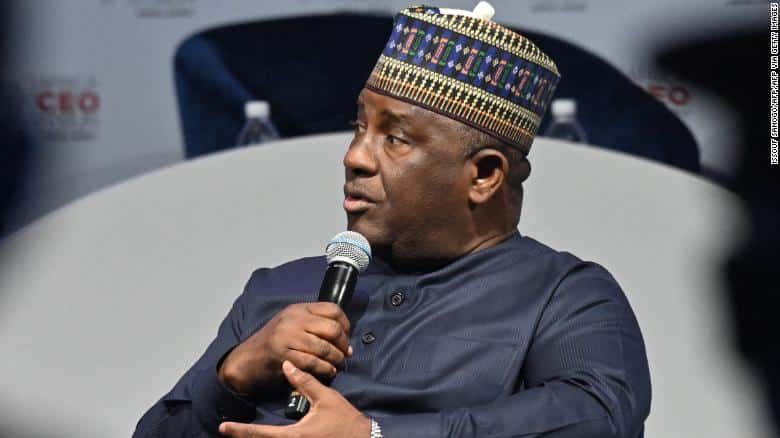
The biggest gainer on Forbes’ list of Africa’s richest people this year, Abdulsamad Rabiu, is doubling down on processing, producing at scale and keeping more value on the continent.
For Abdulsamad Rabiu, the past year has been more about validation than celebration.
He is the biggest gainer on this year’s list of Africa’s richest people compiled by Forbes. His wealth surged by $6.1 billion to $11.2 billion. He is now ranked the third richest on the continent, behind South African luxury goods tycoon Johann Rupert.
“The market has responded. But that is just a trailing indicator of what we had built into the business off the back of 2024. Last year, profit after tax grew by over 380%, supported by improved efficiency and a significant reduction in foreign exchange (FX)-related losses,” Rabiu, Founder and Executive Chairman of BUA Group, says to FORBES AFRICA, about the subsidiary BUA Cement’s 135% share price increase significantly contributing to his net worth.
In Nigeria and across West Africa, cranes are a common sight. Road networks stretch outward to meet growing populations. Demand for cement continues to rise. Rabiu saw this early on.
He built his business around this trend in 2008 when BUA Cement commenced operations.
“We have kicked-off expansions across both our Sokoto and Edo ultra-modern plants, so, by 2027/2028, we should be looking at about 23 million metric tons a year. Our strategy is simple: position ahead of the demand,” Rabiu discloses.
In another part of the business, bags of flour, rice and sugar pass through warehouses under the BUA Foods arm of the BUA Group conglomerate. Here too, the pace may be different, but the logic is the same: a rapidly growing population needs to be fed every day.
BUA Foods posted a 91% increase in profit after tax in 2025, driven by investments in milling, refining, and distribution. For Rabiu, the measure of success is not how profitable the companies are but how many homes the food reaches.
“If cement is about building infrastructure, food is about sustaining life,” he says.
There is a practicality in the way he talks, a lack of grand theories in favor of hard experience. And it comes across even more in the way he talks about his next big bet: a 200,000-barrel-per-day refinery and petrochemicals plant being developed in southern Nigeria’s Akwa Ibom state.
“Work is ongoing. We’re moving in phases to make sure we get it right. Nigeria is Africa’s biggest oil producer, yet, it has historically relied heavily on imported refined petroleum products due to limited domestic refining capacity. The refinery will help address this gap while supporting the country’s broader energy security objectives,” Rabiu explains.
The industrialist belongs to the school of thought that Africa’s growth will not come from what it exports, but from what it makes. For decades, many economies in Africa have exported raw materials and imported finished goods at a premium.
But there is an ongoing paradigm shift taking place. Following the acute supply disruption triggered by the ongoing United States (U.S.)-Israel-Iran conflict, Africa’s richest man Aliko Dangote’s refinery, Africa’s largest, which began large-scale operations in 2024, has begun exporting refined fuel across the continent after reaching full production capacity of about 650,000 barrels per day.
“With the right environment, African businesses have the capacity to build globally competitive industries that can drive sustainable growth across the continent. For Africa to accelerate industrialization, governments must prioritize policies that support long-term investment in manufacturing. This includes reliable infrastructure, stable and predictable policies, access to financing, and stronger regional trade integration,” Rabiu suggests.
He views artificial intelligence (AI) as more of an enabler, not a replacement for the kind of industrialization Africa still urgently needs. “Where AI comes in is on the efficiency side. We’re looking at how it can help us; optimize production and reduce waste, improve supply chain and logistics planning, strengthen demand forecasting and pricing decisions,” he explains.
With regional trade deals unlocking new possibilities under the African Continental Free Trade Area (AfCFTA) framework, he envisions a future where his conglomerate is a pan-African industrial company.


