Biotech Bravado: What This Entrepreneur Is Pioneering In Africa
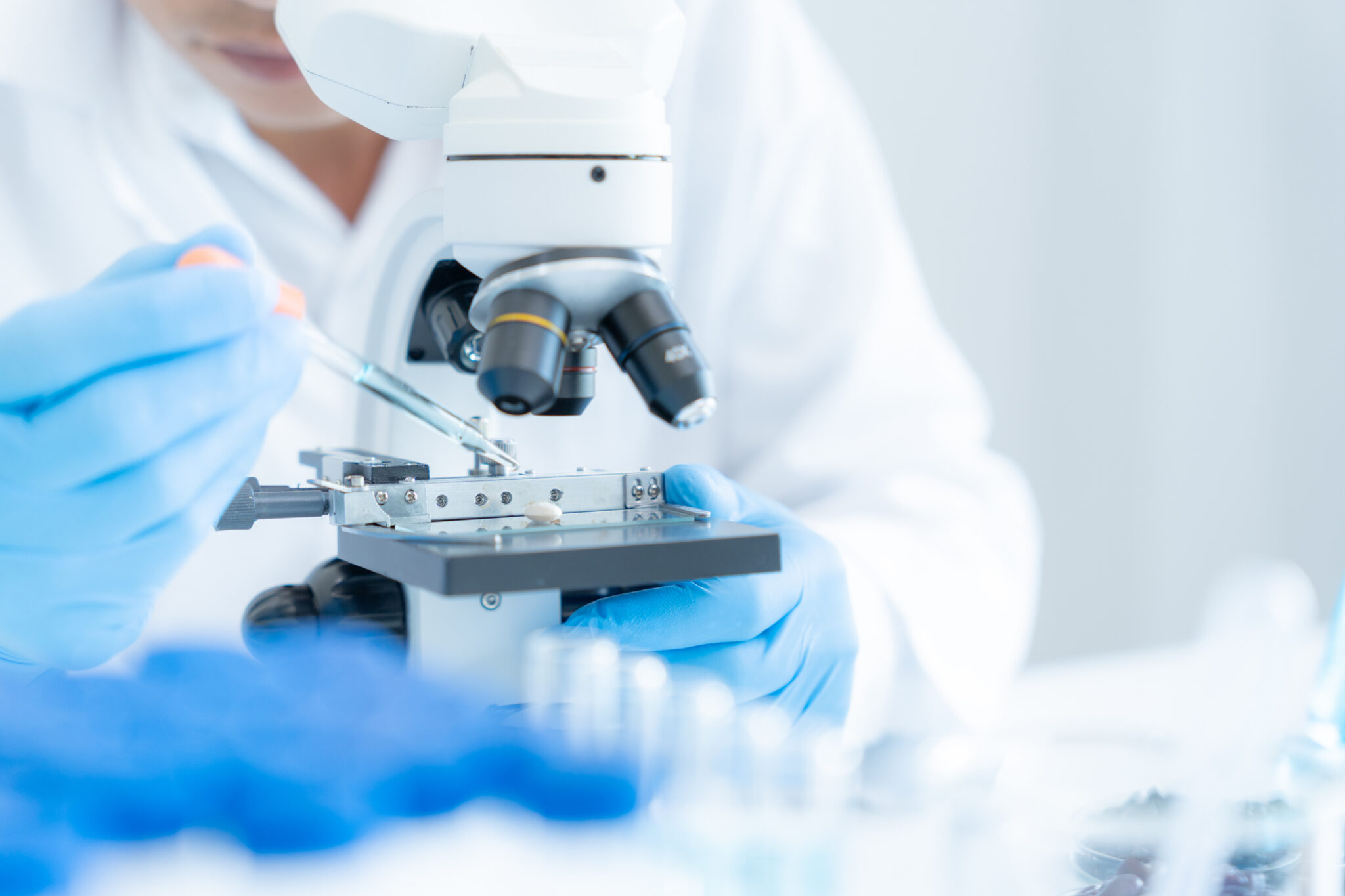
Ghanaian immunologist and biotech entrepreneur, Dr Yaw Bediako, is doing critical work, using his startup to amp up the representation of African data in oncology drug discovery.
At the laboratory of a genomics research company headquartered in Ghana’s capital Accra, the low, steady whir of a whole-genome sequencer, calibrated to read the most intimate instructions of human life, is helping process cancer samples collected thousands of miles away, from across Africa.
“Sequencing is ongoing… We recruited over 300 people last year. So, we are on course,’’ Dr Yaw Bediako, Co-founder and CEO of Yemaachi Biotech, says to FORBES AFRICA in a virtual conversation, seated in his office in Accra.
For Bediako, this moment bears emotional weight. Nearly two decades earlier, his father, Kwame, a Ghanaian academic who had devoted his life to teaching, died of liver cancer. At the time, the disease arrived with an air of inevitability, poorly understood, and treated with tools developed largely for the Western world.
“The targets for new treatments are discovered by analyzing genomic data from cancer patients. Now very little of that data is from people of African descent. Probably less than 3% of genomic data available is from African people. And so that means when these drugs are developed, it doesn’t necessarily mean they will be as effective in our populations,” says Bediako.
Today, after obtaining a machine that did not exist in Ghana when his father fell ill, Bediako is attempting something audacious: to re-insert Africa into the very foundations of global cancer research.
The effort has required him to absorb not just one loss, but two.
In 2021, Bediako was riding what should have been a career-defining wave. He had secured the London-based Royal Society fellowship—funding that would allow him to continue his research and deepen collaborations between African and Western institutions.
Then, the Covid-19 pandemic happened.
As governments scrambled to stabilize collapsing economies, research budgets were significantly gutted. Roughly 70% of the fellowship funding allocated to grantees like Bediako vanished.
“We are a small startup. We are always looking for additional funding. I don’t even think some of the big companies will ever tell you that they have everything they need,” says Bediako.
For many researchers, the loss would have been paralyzing. For Bediako, it became clarifying.
If the systems he relied on could disappear overnight, then building something durable, something rooted in Africa, was no longer optional.
In 2020, he co-founded Yemaachi Biotech with David Hutchful, Joyce Ngoi, and Yaw Attua-Afari.
The name Yemaachi is a portmanteau drawn from three Ghanaian languages, loosely translating to “a new dawn for health in Africa”. It is a phrase that sounds aspirational, until one grapples with the scale of the problem the company set out to address.
Globally, nearly 80% of genomic data used in cancer research comes from people of European ancestry. “If we are thinking about cancer data, I’m sure it’s even less than 2% of cancer genomes that are from Africa,’’ says Bediako.
The imbalance has consequences that are both immediate and deadly: drugs that work less well, diagnoses that come too late, and survival rates that lag dramatically behind those in high-income countries.
In 2023, the World Health Organization (WHO) said Africa records approximately 1.1 million new cancer cases each year, with about 700,000 deaths. Without urgent intervention, that figure is expected to approach one million deaths annually by 2030.
For children, the disparities are even starker. An estimated 85% of pediatric cancers occur in low- and middle-income countries, where survival rates hover around 30%, compared with 80% in wealthier nations.
Yemaachi Biotech’s core insight is simple on the surface: before Africa could benefit from precision medicine, it needed to be visible through sufficient genomics research.
The company’s most ambitious project, The African Cancer Atlas—known as TACA—aims to sequence 15,000 cancer genomes from 7,500 African patients across the continent. It is a scale of genomic work that has never before been attempted in Africa.
According to Bediako, the initial phase targets 3,000 genomes, in partnership with Roche, the Swiss pharmaceutical giant, which serves as the project’s anchor partner.
Lisa Rooney Slater, Head of Roche’s African Genomics Program, described the partnership as a step toward equitable collaboration. “By partnering with Yemaachi, we hope to leverage Africa’s genomic diversity to accelerate healthcare for cancer patients in Africa and beyond,” Slater was quoted to have said when the initiative launched.
Patients are being enrolled in Côte d’Ivoire, Ghana, Nigeria, Kenya, and the Seychelles, with plans to expand further. The work is executed through a consortium of more than 25 hospitals and research institutions across nine countries—many of them leading cancer treatment centers.
Each sample is paired with detailed clinical data, creating a resource that pharmaceutical companies and academic researchers can use to identify new drug targets and understand how existing therapies perform in genetically diverse populations.
“The thing about African data is African data is not just useful for African people. African data is useful for all people because our species evolved from this continent. So, Africa has more genetic diversity than any other part of the world. And really everybody else’s genomic diversity can be traced back to the continent,” says Bediako.
According to him, variants associated with European, Asian, and Latin American populations can all be found within African populations—often alongside variants that exist nowhere else. For drug discovery, that diversity is significant.
“And so, our data will make precision medicine and precision oncology more useful and more effective, not just for African people, but for people everywhere,” says Bediako.
This principle has already yielded results. In one study, Yemaachi Biotech researchers sequenced tumors from 200 Ghanaian women with breast cancer and identified a previously undocumented variant in the BRCA gene, long associated with hereditary breast and ovarian cancers.
Science at this scale requires more than insight. It requires machines, regulatory approvals, ethical oversight, trained personnel, and the ability to move data, often across borders.
Africa, as Bediako is quick to note, is not a single country.
To navigate the bottlenecks, Yemaachi Biotech has leaned heavily on partnerships with local institutions and invested in technology to standardize processes without erasing context. The company developed its own proprietary clinical management system, Uvosyo, designed to manage studies across languages, countries, and health systems while maintaining data quality.
Last year, Yemaachi built whole-genome sequencing capacity in Ghana—reportedly a national first. The installation of Illumina’s NovaSeq X Plus marked a turning point: African samples no longer had to leave the continent to be processed.
The company’s ambitions extend beyond data generation. In October, Bediako orchestrated a landmark partnership with Bio Usawa, a biologics manufacturing company focused on producing therapies, such as monoclonal antibodies, within Africa.
The logic is circular, and deliberately so. Yemaachi Biotech identifies new drug targets using African genomic data. Bio Usawa manufactures biologics designed to act on those targets. Together, they close a loop that has historically excluded the continent.
Yemaachi Biotech is venture-backed, having raised a $3 million seed round in 2022 led by V8 Capital Partners, with participation from Y Combinator, Tencent, and others. The company received a $1 million grant awarded to Bediako from the Bill and Melinda Gates Foundation through the Calestous Juma Science Leadership Fellowship.
Tobi Oke, Managing Partner at V8 Capital, described Yemaachi as a bet on untapped potential. “The vast resource of African genetic diversity, can power the next generation of cancer diagnostics and therapeutics,” Oke was quoted to have said about the close of the $3 million seed round.
The company is now preparing to raise a Series A round, even as it balances commercial partnerships with an explicit commitment to social benefit. Data from TACA will be made freely available to African universities, while pharmaceutical partners gain access for drug discovery.
Last November, Bediako was appointed Dean of Research and Innovation at Ashesi University in Ghana, formalizing his commitment to building a sustainable research and development ecosystem across Africa, as announced by the institution.
“It will take more than just Yemaachi Biotech. We hope that we will be the beginning of almost a revolution, right? Almost the beginning of a wave of biotech companies that would come into the continent to drive this industry forward for our continent. If we can achieve that, then we will make the health of people in Africa better, but we’ll also make the health of people all over the world better, thanks to the discoveries that we make.”


