This Former SpaceX Product Manager Raised $8 Million To Put AI On Satellites
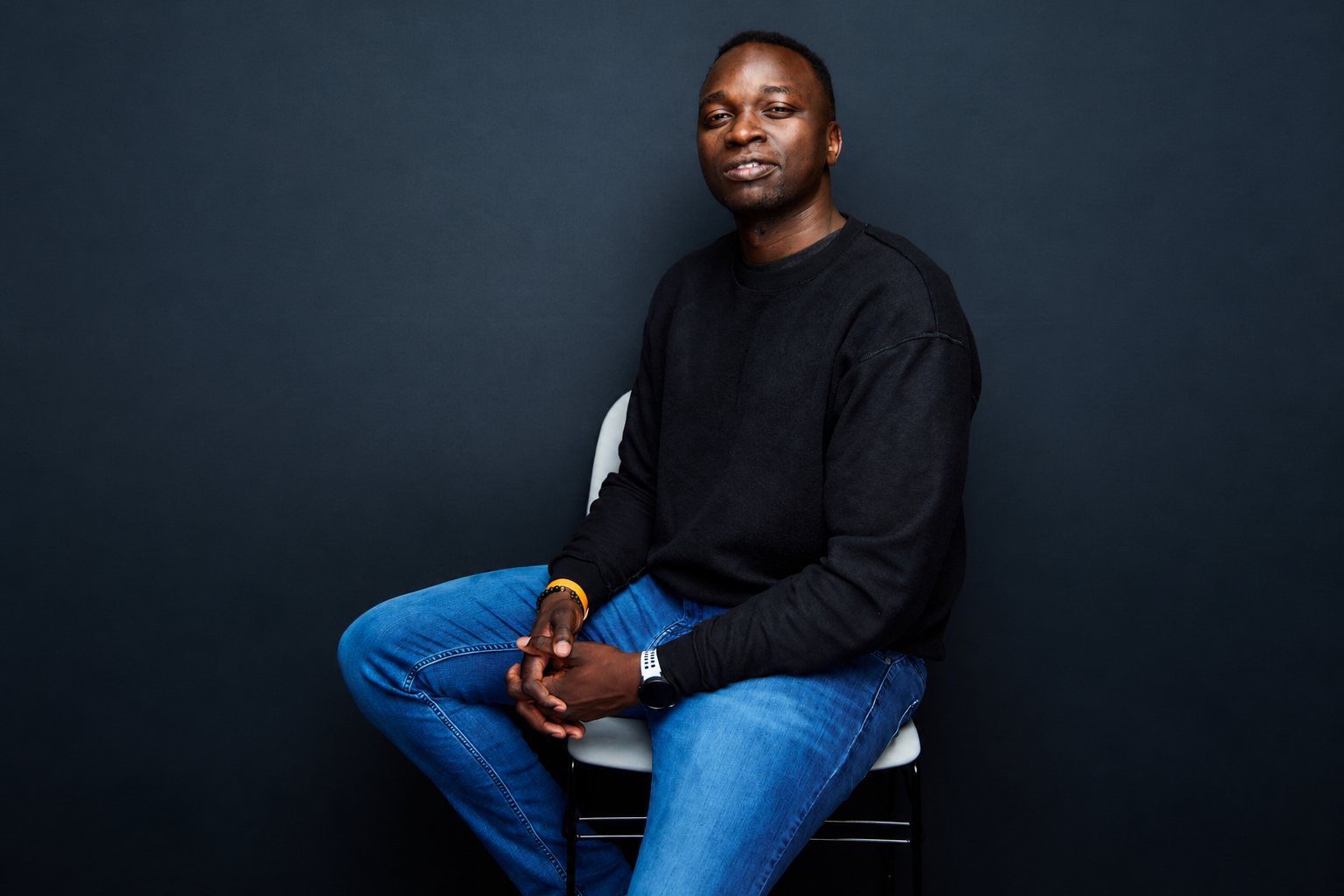
Seven people, $8 million in seed funding and software running on three satellites, according to its founder. Kenyan engineer Rama Afullo’s Satlyt reached the final five at TechCrunch Disrupt by tackling a costly problem: how much satellite data really needs to come back to Earth?
Rama Afullo first saw TechCrunch Disrupt on television. He was a student in South Africa, watching Silicon Valley, the HBO comedy about startup founders, and the conference kept turning up in it.
“TechCrunch Disrupt was on Silicon Valley, and I thought, in order to say I’m a founder in Silicon Valley, I need to go to TechCrunch Disrupt,” he said.
This week he pitched on its stage. Satlyt, his seven-person space software company, was one of 20 startups chosen from a field of 200 for the Startup Battlefield, and one of five finalists. Intero Biosystems, a Denver company growing human intestinal tissue for drug testing, took the $100,000 prize. The Australian anti-scam company Apate was named runner-up.
Yet the satellites already in orbit have a plain problem. They collect more data than they can send home, and ground stations charge to receive it. The tracking site KeepTrack counts about 16,800 active satellites as of October 2026, 10,838 of them Starlink’s. Afullo puts the fee at “a dollar per gigabyte.” TLCOM, an investor in Satlyt, cites roughly $20. Without contract terms, it’s unclear whether the two describe the same service.
Satlyt’s software lets a satellite run AI on board and send down only what matters. The best-documented result is a Google DeepMind case study: in two fault-injection tests, a diagnostic message shrank from about 1,300 bytes to roughly 470, a cut of about 64 percent. The page is a Google showcase, and the figures are Satlyt’s own measurements. Afullo cites bigger numbers. He says the software runs on three satellites and has cut telemetry by 97 percent. TechCrunch counts two demonstration missions, and TLCOM cites cuts of up to 85 percent. These figures describe different workloads and are not directly comparable, and the scope and baseline of the 97 percent figure require clarification.
Afullo was born in Kenya and studied mechanical engineering and business management at the University of Cape Town, according to his SmallSat Europe biography, which lists stints at Google’s cloud business, Tesla and SpaceX’s Starlink. TechCrunch reports he pitched the idea at both Google and SpaceX and was turned down. Both are now in the field. He says the whole team is African, with three members in the United States and four in Kenya, Zambia, Eswatini and Ghana.
Satlyt announced an $8 million seed round this month, led by Non Sibi Ventures of Houston. Its next deployment rides on TakeMe2Space’s MOI-1A satellite, which Inc42 reported lifted off on a SpaceX rideshare in early October. Satlyt says launch and a successful run in orbit are separate milestones. Federal contract data lists its NASA work as a Phase I research award of roughly $180,000. Afullo did not provide revenue figures, pricing or a count of paying commercial customers during the interview.
For Forbes Liberia, Kseniia Shaverskaya, together with journalist Anna Shaverni, spoke with Afullo at the event on Wednesday, Oct. 14, about building a space company with engineers in five countries, why African founders should look beyond fintech, and what Satlyt still has to prove.
Anna Shaverni:
You worked at SpaceX before starting Satlyt. What did you see there that made you decide to build this yourself?
Rama Afullo:
I knew before I joined SpaceX that I wanted to build this because I was pitching this at Google before that. [...] The other thing I realized was that one of the biggest metrics they were measuring was the total latency of the system. So how much time it takes, the round-trip efficiency of your system, how much time it takes for you to go from sending data from the satellite down to the ground and back to the satellite.
And so I said, well, that is something I can help solve with software as well. [...] I said, I can do this myself. Let me go build a team.
Kseniia Shaverskaya:
In the Google case study, AI helped find severe problems. What happens if the AI gets it wrong?
Rama Afullo:
I mean, what happens when a human gets it wrong? Similar thing, we work with small language models, so it’s very much containerized. [...] When we’re deploying in space, we’re only doing inference. We’re not doing any training, right? At least at the moment. [...] And we also are not part of the flight controls. So that if the AI gets something wrong, it’s something that can be easily corrected.
Anna Shaverni:
What can your team in Nairobi do better than a team based only in Silicon Valley?
Rama Afullo:
It gives us an advantage because we also work around the clock. Because as their day ends, our day begins and vice versa. [...] The dollar goes a lot further in Africa than it does here. So with the same amount that it costs me to hire a senior engineer here in Silicon Valley, I can probably hire three or four equal or even better skilled senior engineers out in Africa.
I mean, that’s still like maybe not the best thing in terms of what that means for us economically as sort of a continent, but it’s useful for me building out this business and empowering people back home who are earning, even getting that amount, double or triple what they would earn somewhere else.
Kseniia Shaverskaya:
It’s a complicated path for a founder from Africa. What do you think Africans should do to become tech founders?
Rama Afullo:
You don’t only have to build in FinTech. You can do something else. You can try something else. We’re building a space company, which is very different from what most people would decide to do. [...] A good chunk of our investors are actually African. [...] At least 70% of our investors are either African or African-American.
Anna Shaverni:
What can your software do today, and what’s still in the plan?
Rama Afullo:
It can do plenty today. There’s a lot in the plans, but right now we have our software on three satellites in space, as you speak. [...] Right now we can make singular satellites very efficient. [...] But in the future, we want to be able to do that across multiple satellites for them to work with each other. And then we want to then also, part of what we’re doing at NASA, is stream 4K video from the moon down directly to your device. Directly to your phone. So it’s some sci-fi stuff that we’re attempting to do, but essentially we become the brains running across all spacecraft in space. That’s our goal.
Kseniia Shaverskaya:
Is there anything you’d like to add?
Rama Afullo:
I think the fundraise is great $8 million is cool. But more importantly, is that we’re actually building something that there’s a demand for, and that we’re actually creating a category, essentially space internet, that did not exist before. [...] There’ll be a lot of people telling you, this doesn’t make sense, because when I was at Google, and when I was at SpaceX, they were telling me the same thing. Now they’re both doing it also.
Satlyt has put software in orbit, and its backers say the bet doesn’t depend on orbital data centers paying off. “We don’t need data centers in space for Rama to be wildly successful, right?” Non Sibi’s Kent Lucas told TechCrunch. The shared cloud across two satellites that TechCrunch says Satlyt expects to try next year is still a plan. Afullo did not say whether the 70 percent of investors he cited counts investors or dollars.
How much revenue comes from commercial deployments, and how that business will scale, is not yet clear.


