The Fitting Room Never Closed — It Just Moved Online
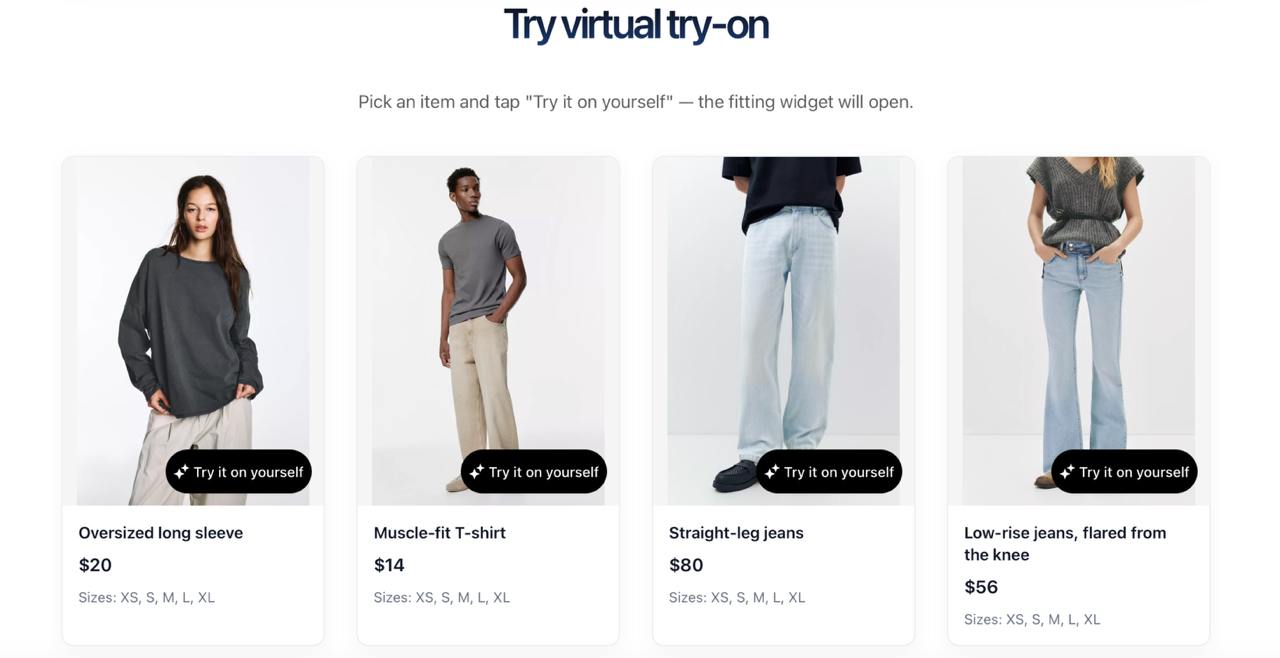
Every year, fashion e-commerce grows. And every year, fashion e-commerce returns grow with it. According to industry estimates, apparel sees return rates of 25–40% online — compared to roughly 8% in physical retail. The core reason has barely changed: people are not sure something will fit or look right before they buy it.
That gap between "looks good on screen" and "works on me" has been costing brands quietly for years. Customer acquisition costs rise, margins thin, and logistics teams absorb the difference. The traditional answer — better photography, more size information, more detailed product descriptions — has reached its ceiling.
What is changing the equation now is not a new gimmick. It is a maturation of AI-driven virtual try-on from a novelty for tech giants into a deployable tool for brands at every scale.
From Experiment to Infrastructure
Large platforms have been experimenting with virtual try-on for nearly a decade. The results were often impressive in demos and inconsistent in practice. Early AR overlays struggled with accuracy; body-type diversity was limited; integration was expensive and slow. The technology was real, but it was not yet ready to be reliable.
That has changed. The convergence of better generative AI models, more accessible APIs, and cloud-based deployment has compressed both the cost and the complexity of building a functional try-on experience. What once required a six-figure engineering engagement can now be live on a brand's website within a business day.
"The goal was never to impress with technology. It was to help a shopper make a decision — the same decision they would have made confidently in a physical store."
This shift matters especially for mid-market fashion brands — those with a real customer base, real product, and real return problems, but without the engineering resources of a marketplace. For years, this segment watched the technology from the outside. The entry point has finally arrived.
What Actually Moves the Needle
Not all virtual try-on is equal. The versions that generate headlines — photorealistic avatars in metaverse showrooms — are not the ones driving conversion on product pages. What works in practice is simpler and more grounded: help the shopper answer two questions. Will this fit? And will this look right on me?
Size-aware virtual fitting is the key differentiator. A purely visual overlay tells a customer what a garment looks like on a generic model. A sizing-integrated experience tells them how it will fit their specific body — accounting for height, proportions, and the brand's particular sizing block. That information reduces doubt, and reduced doubt converts.
At LOOKSY, we have tracked outcomes across multiple brand integrations. Conversion lifts of 13–21% are consistent when try-on is paired with size guidance. Return rates drop by 6–10%. These are not projections; they are measurements from live deployments with fashion brands in the mid-market segment.
The Bigger Picture: AI Moving Into Retail Operations
Virtual try-on solves a specific, measurable problem at the point of purchase. But it is also part of a larger shift: AI moving from front-end customer experience into the operational layer of retail and commerce.
The next wave of tools being developed for fashion brands is less about visual experience and more about speed — processing orders faster, reducing manual workflows, routing customer inquiries without adding headcount. AI agents that handle routine commerce operations are beginning to move from concept to practice, particularly for brands managing high order volume with lean teams.
For brands, the relevant question is not which specific tool to adopt first, but how to build a stack where each layer compounds the one before it. A customer who tried on a product virtually and purchased with confidence generates less downstream friction — fewer return requests, fewer sizing queries to customer service. That reduction in friction is where AI's operational value starts to become visible on the balance sheet.
The brands that will be best positioned are those building that compounding stack now, while the cost of entry is still low and the competitive advantage is still real.
The Market Shift That Is Still Underway
Fashion e-commerce is projected to reach over $1 trillion in global market volume by the end of the decade. The brands best positioned in that market will not simply be those with the largest advertising budgets or the widest assortment. They will be those that built the highest-confidence purchase journeys.
Consumer expectations are shifting faster than most brand roadmaps acknowledge. Try-on and personalized fit guidance are becoming baseline expectations, not premium features. The question for brand leadership is not whether to invest in this direction, but when and how.
The answer, increasingly, is sooner than most brands assume. Deployment timelines have collapsed. Pricing models have shifted from large upfront fees to usage-based credits that scale with actual traffic. The integration effort has been absorbed by specialist providers. The cost of waiting — in returns, in lost conversion, in competitive positioning — is becoming the more expensive option.
"Mid-sized brands are not waiting for a custom build. They are plugging in, going live, and seeing results within the first month. The barrier is no longer technical — it is awareness."
What to Watch in the Next 12 Months
Several developments are worth tracking for anyone building strategy in this space. First, the accuracy and coverage of size-aware virtual fitting continues to improve — more body types, more garment categories, more reliable fit prediction. Brands that integrated early are already seeing second-order benefits as their try-on data matures.
Second, the integration surface for try-on is expanding. What started as a widget on a product page is becoming available across multiple commerce touchpoints — embedded in brand apps, accessible via mobile-first shopping experiences, and increasingly connected to CRM data for personalization.
Third, data from try-on interactions is beginning to feed back into sizing and assortment decisions. Brands that have been flying blind on how their sizing runs relative to customer bodies now have a signal. That feedback loop, aggregated over time, has supply-chain implications that go well beyond the purchase moment.
Virtual try-on is no longer a story about technology. It is a story about conversion, returns, and customer trust. The fitting room moved online. The brands that equip it well will show in the numbers.
About the authors
Natalia Varga and Kirill Pegov are co-founders of LOOKSY, a Dubai-based AI virtual try-on platform for fashion and apparel brands. LOOKSY provides size-aware fitting technology to mid-market brands, helping them increase conversion and reduce returns. go.looksy.tech


