Sali Clinton and the Other Side of the Afrobeats Boom
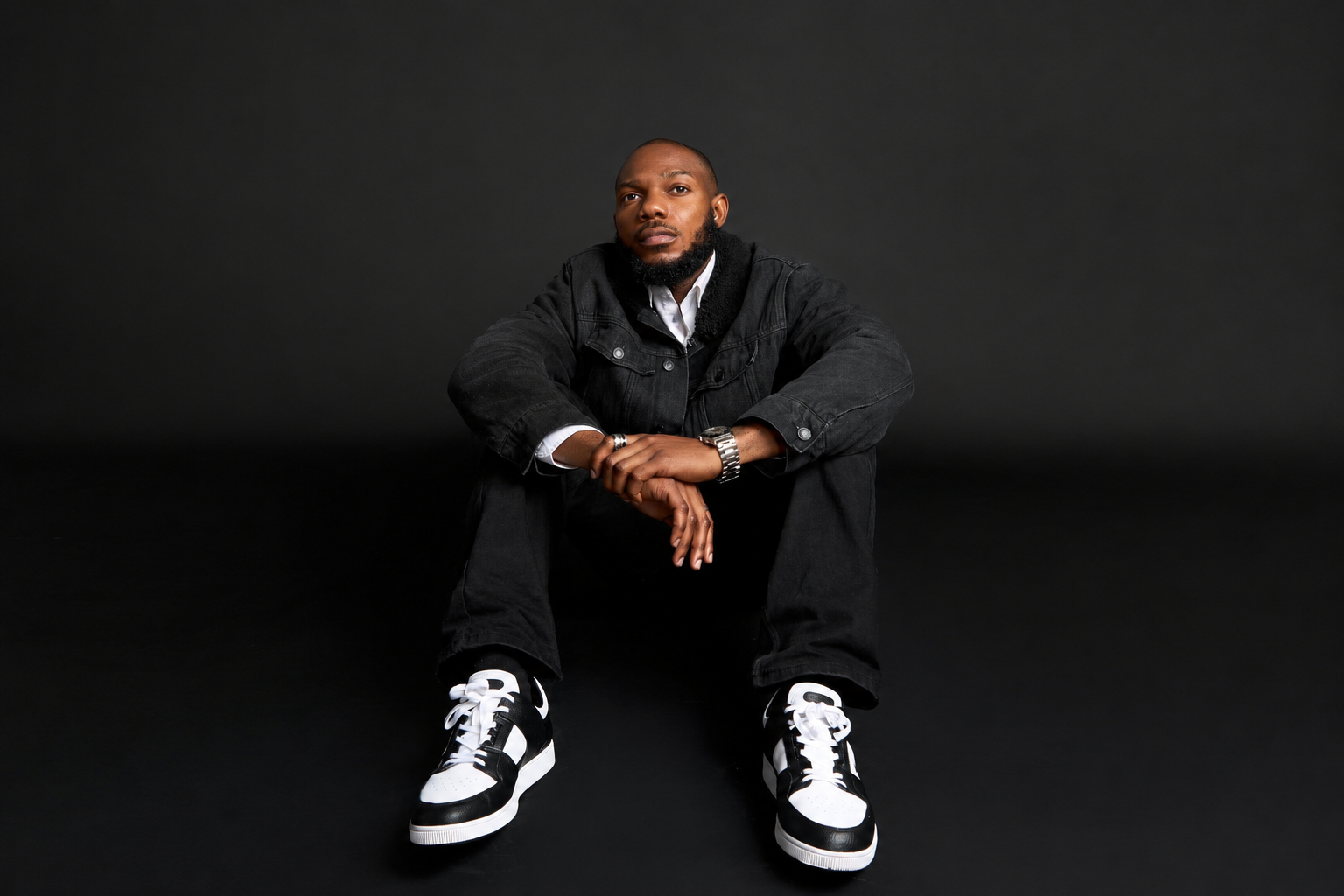
Nigerian-born, UK-based and entirely independent, the singer and bassist has placed his music in international film and built a following without a label. As streaming turns Afrobeats into a global export, he explains why the numbers at the top say little about the artists sustaining the genre below.
When Spotify marked five years in Nigeria in February 2026, one figure captured the scale of the change: Afrobeats streams in the country had risen by more than 5,000 percent since 2021. Gospel, R&B and music in Nigerian indigenous languages were growing rapidly too, pointing to a broader shift in how Nigerian audiences were listening. By then, the sound had travelled far beyond Nigeria, with London and Paris among the cities streaming Afrobeats most heavily on Spotify.
It is one of the great cultural export stories of the decade. Yet the same data reveals something quieter: the billions of streams and record royalty payouts accrue overwhelmingly to a small number of established stars. Beneath them sits a far larger population of independent artists, many in the diaspora, making honest work with no label, no marketing budget, and no guarantee the boom above them will ever reach down.
Sali Clinton belongs to that second group. This month he released Fall in Love, a new single written, recorded and released without a label, a marketing budget, or a publicity machine behind it, a useful way into the wider picture, and one he is unsentimental about.
From a borrowed guitar to Amazon Prime
Clinton was born in Southern Nigeria, the first child of a traditional household that expected him to become an engineer. Music was not part of the plan. He found it anyway, first in church, where he learned guitar before he ever sang, and later in secret: with no instrument of his own, he would borrow a friend’s guitar and practise late at night in the furthest room of the house, after the family had gone to sleep. His father would catch him and send him back to bed. He kept going.
That persistence became the foundation of a catalogue that refuses to sit still, moving between Afrobeats, Afro-fusion, Pop, R&B, soul and gospel-inflected songwriting, held together less by sound than by sincerity. He has spent several years now making real strides in the UK while staying rooted in his Nigerian identity, building his catalogue independently: original music for the 2023 feature film Flaws, available internationally on Amazon Prime Video, and songs featured in TNC Africa’s series Our Best Friend’s Wedding, which drew several million views. Earlier singles such as Outside found an audience among Nigerian listeners; My Darling revealed a softer, more intimate side of his writing.
His new single, Fall in Love, released this month, opens not with a hook but with a spoken line, “Since that Sunday…”, the day, he says, he met the love of his life. The chorus arrives in Nigerian Pidgin, “I don fall in love,” a phrase that usually invites a loud Afrobeats celebration; Clinton delivers it instead as a hushed confession. Sonically, it rests on a warm, Highlife-inflected guitar loop and his own live bass, an instrument he has played since his earliest years in church, his breathy tenor stacked into soft, gospel-tinged harmonies rather than pushed to the front.
For Forbes Liberia, Kseniia Shaverskaya, together with journalist Anna Shaverni, spoke with Clinton about artistic identity, the economics of doing it alone, and why he believes emotional honesty outlasts every algorithm.
Kseniia Shaverskaya:
Afrobeats is now one of the most-streamed sounds on earth, but that success is concentrated at the very top. As an independent artist, how do you see your place inside that picture?
Sali Clinton:
I see myself as a storyteller before anything else. Music is simply the language I use. I don’t like putting myself into one genre because every song begins with an emotion or an experience rather than a style. Sometimes that becomes Afrobeats, sometimes Afro-fusion, Pop, R&B, Gospel, or something more stripped back. I want people to recognise honesty before they recognise a genre.
Anna Shaverni:
What are you really trying to express through your music?
Sali Clinton:
I’m trying to express the parts of life we don’t always talk about — love, loss, hope, faith, growth, resilience, the emotions that shape us. If someone hears one of my songs and feels understood, comforted or inspired, then I’ve achieved what I set out to do. Music has always helped me process life, and I hope it does the same for others.
Kseniia Shaverskaya:
Your roots are in Nigeria, but you have spent years making music in the UK. How do those two worlds shape your sound?
Sali Clinton:
Nigeria gave me my musical foundation. Growing up, I was surrounded by African rhythms, melodies and storytelling, and those influences will always be part of who I am. Living in the UK has broadened my perspective. I’ve been exposed to different cultures, musicians and ways of creating, and that’s made me more open creatively. Today, my music reflects both worlds — it carries the energy and warmth of my Nigerian heritage while embracing the diversity and collaborative spirit I’ve experienced in the UK.
Anna Shaverni:
Your music has already travelled back to African audiences through film and streaming. What does that mean to you?
Sali Clinton:
It means a great deal, because it reminds me that music can travel further than we ever imagine. Seeing my songs featured in film and discovering listeners in places I’ve never been is incredibly humbling. It tells me that genuine stories and honest music can connect with people regardless of geography, and that motivates me to keep creating meaningful work.
Kseniia Shaverskaya:
You have built everything independently, without a major label. Was that important to you, or simply how it happened?
Sali Clinton:
It wasn’t necessarily the plan — it was simply the path that was available to me. Building independently has taught me resilience, patience and discipline. I’ve had to learn not only how to make music, but also how to manage projects, collaborate with people, promote my work and continue believing in the vision even when progress seemed slow. Those experiences have shaped me into a better artist and professional.
Anna Shaverni:
Many artists now chase viral trends, yet your music feels deliberately intimate. On “Fall in Love,” you even take a Pidgin phrase that usually demands celebration and turn it into something quiet. Is that intentional?
Sali Clinton:
Absolutely. Trends come and go, but genuine emotion lasts. I don’t write songs thinking about algorithms; I write about moments that have changed me or feelings I believe other people can relate to. If a song becomes popular, that’s wonderful, but I want it to be because people genuinely connected with it rather than because it followed a trend.
Kseniia Shaverskaya:
Are there themes or feelings you find yourself returning to?
Sali Clinton:
Hope is probably the biggest one. Even when I write about heartbreak, loneliness or uncertainty, I like to leave room for hope. I also return to themes of love, identity, perseverance and personal growth, because they’re experiences we all share. Every chapter of my life teaches me something new, and those lessons usually find their way into my music.
Anna Shaverni:
What are you building toward now?
Sali Clinton:
Right now, I’m focused on releasing new music and completing my upcoming EP, which reflects my growth both personally and artistically. I’m also continuing to develop my work as a live musician, collaborating with creatives and contributing to the UK’s cultural landscape through performance and community engagement. Looking further ahead, my goal is to build an international career that connects audiences across cultures while remaining authentic to who I am. I want my music to represent where I come from, contribute positively to the UK’s creative industry, and inspire the next generation of independent artists to believe that persistence and authenticity can open doors.
The cost of doing it alone
None of this comes without friction, and Clinton is candid about the trade-offs. Independence gives him creative control. It also means slower growth, inconsistent income, and none of the infrastructure that accelerates visibility inside a system built to reward volume: playlist relationships, marketing spend, distribution leverage. Algorithmic playlists favour immediacy over the kind of quiet, unhurried songwriting Clinton practises, and “Fall in Love” makes little effort to compete on those terms. It is a stronger piece of writing for that choice, even if a harder song to get noticed, a trade-off that increasingly defines independent African and diaspora artists more broadly.
The value beneath the volume
Clinton’s position matters because it complicates the headline story. The streaming figures describe a genre in ascent, but say little about the artists who sustain its cultural depth from below, documenting Nigerian identity in Pidgin and in English from bedrooms and small studios across the UK and beyond. Their work rarely trends. That is arguably where much of the genre’s emotional weight still lives.
In an attention economy, visibility increasingly determines value: which artists get seen, funded and remembered, and which quietly disappear. Clinton’s case for himself is not made through volume. It is made through the work. Fall in Love is not chasing a viral moment, and it does not need to. What it has instead is a clear artistic voice and the nerve to keep a feeling quiet rather than perform it. That, on its own, is worth paying attention to.