Beats, Business And A Bridge To Africa: The Music Entrepreneur Investing In Young Artists
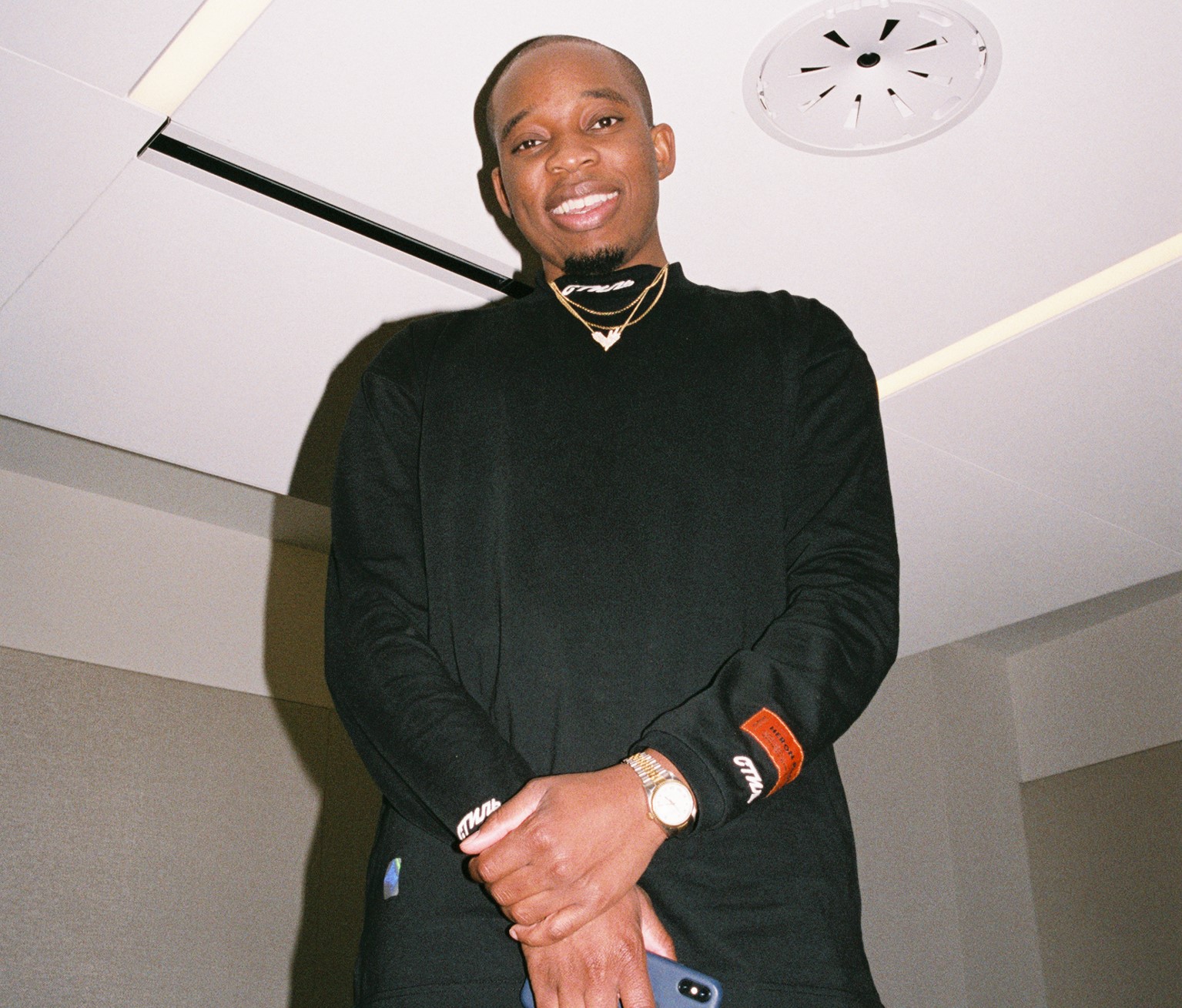
Since launching in 2012, record label LVRN (Love Renaissance) has gone from a small boutique in Atlanta, Georgia, into a label that represents artists globally. Further expanding on the African continent, reportedly securing a $25 million investment, CEO and Co-Founder Tunde Balogun says it is now not just a business but a cultural mission.
Tunde Balogun grew up between two worlds and it’s this cultural duality that now drives his mission: to amplify African music globally.
“The culture wasn’t always around me growing up, but being immersed in both American and Nigerian cultures allowed me to see both sides of the world. That experience has always helped me keep an open mind when it comes to music and culture, as they’ve evolved,” Balogun, the CEO and Co-Founder of LVRN (Love Renaissance), says in an interview with FORBES AFRICA.
From a young age, Balogun knew and understood the power that African music has and its potential to be a global sensation. Born to Nigerian parents in the United States (U.S.), he says he was always drawn to music from the continent.
“My parents always played African music,” Balogun explains. “As I grew into an executive and eventually started my own company, I gained the power to invest in entrepreneurs and talent. It felt only right for us to go back home, especially since our next focus was global expansion.”
LVRN says its roster reflects a deliberate embrace of Africa’s genre-bending creativity and cultural reach, and includes Nigeria’s first DJ to perform at music and arts festival, Coachella, SXSW, and Glastonbury, Oluseye Desmond Sodamola, professionally known as Spinall.
Another notable name is Nigerian-British Grammy-nominated producer Michael Ovie Hunter (ThisizLondon), who is behind singles such as Rema’s Calm Down, and, in the Amapiano space, South Africa’s all-female Amapiano DJ duo Tarryn Reid and Clairise Hefke (TxC).
Balogun says that this expansion is strategic, however, it is also just a natural evolution of what the brand has always been about, adding, “it’s just that we have a focus and intention on it right now”.
What has been described as having an unwavering passion for music and a “keen strategic vision”, Balogun was beguiled by the power of music from a young age when he used to hold parties in his mother’s basement.
“At 16, my mom let me throw my first party in the basement. She helped me collect money at the door, and I was the DJ for it,” Balogun recalls.
“Dancehall and reggae were big at the time, so our first party was called ‘Reggae Town’. We hosted it after homecoming and a dance at my high school. That was the first money I ever made from anything music-related, and that’s when I realized—this could be something.”
His journey into the industry continued when he began promoting parties alongside rivals who are now his partners at LVRN.
Though the record label has primarily signed R&B artists in the U.S., he has always maintained a connection to Africa, even before its official expansion. In 2023, he oversaw the campaign for Nigerian artist, David Adedeji Adeleke’s (Davido) album Timeless, which is widely regarded as one of Davido’s most accomplished projects to date.
His key leadership philosophy is simple.
“Everyone in the team has somewhat of a creative background. For me, I used to DJ, so I understand the temperament of that branch of music.”
The second is trust and understanding that when it comes to immersive, cross-continental experiences, you need a sense of “cultural diplomacy”. Balogun believes that with this approach, authenticity within cultures can be preserved through music.
“One of the most important things I did before even thinking about doing business was simply spending time on the ground and earning trust. Too often, Americans come to Africa, hand out money, and then leave—as if it’s that easy,” he says.
“But I always say, trust will take you further than a dollar ever could. Trust is what gets deals done. For example, I’ve probably spent more time in South Africa over the last two to three years than anywhere else in the world—consistently.”
In continuing to elevate young African voices and bridge continents through sound, setting a new global standard for music partnerships, in 2024, LVRN signed Nigerian artist, Hillary Dennis Udanoh (Odeal).
With Balogun’s guidance, Udanoh not only emerged as Billboard’s inaugural African Rookie of the Month for January but has also amassed more than 56 million Spotify streams and reached a global audience of over 49 million.
It is no secret that Africa is home to some of the world’s biggest artists, and there are more emerging.
According to streaming platforms, the continent is home to an incredible array of talented individuals who are sharing their unique creativity, storytelling, and sounds with the world; these artists are also using the power of social media to campaign for their culture.
“African creators are doing amazing things in the music and audio content creation space. Moreover, the stories of this crop of creatives are helping others find their passions and their voices,” Jocelyne Muhutu-Remy, Spotify’s Managing Director for Sub-Saharan Africa, said in a statement in 2022.
Balogun admits that although it is important, bringing Africa’s authentic culture to the global stage is difficult but not impossible.
“It takes an entire ecosystem, it’s the music, the artists, the managers, the entrepreneurs who run labels like mine. It’s also the events people attend and the stages where the artists perform. All of it plays a role,” he explains.
“[It’s about] keeping everything authentic, the music authentic, the artist authentic, everything authentic. So, if you’re not from the culture, you’re getting the proper experience. You’re not getting a fake experience of what African culture is.”
As music continues to grow in Africa, LVRN’s CEO says that an important part of the industry is looking to future innovations, which means that there needs to be more investment in the youth.
“Investing in young entrepreneurs and artists who can shape the future of their countries and inspire those who come after them is incredibly important.
“The only reason I’m able to do what I do today is because some OGs pulled me and my business partners in—they gave us opportunities, let us be ourselves, brought us into rooms we had no business being in, and introduced us to people who changed our lives.”


