AI Ads: The New Battle For Attention Starts Inside The Answer, Not The Search Page
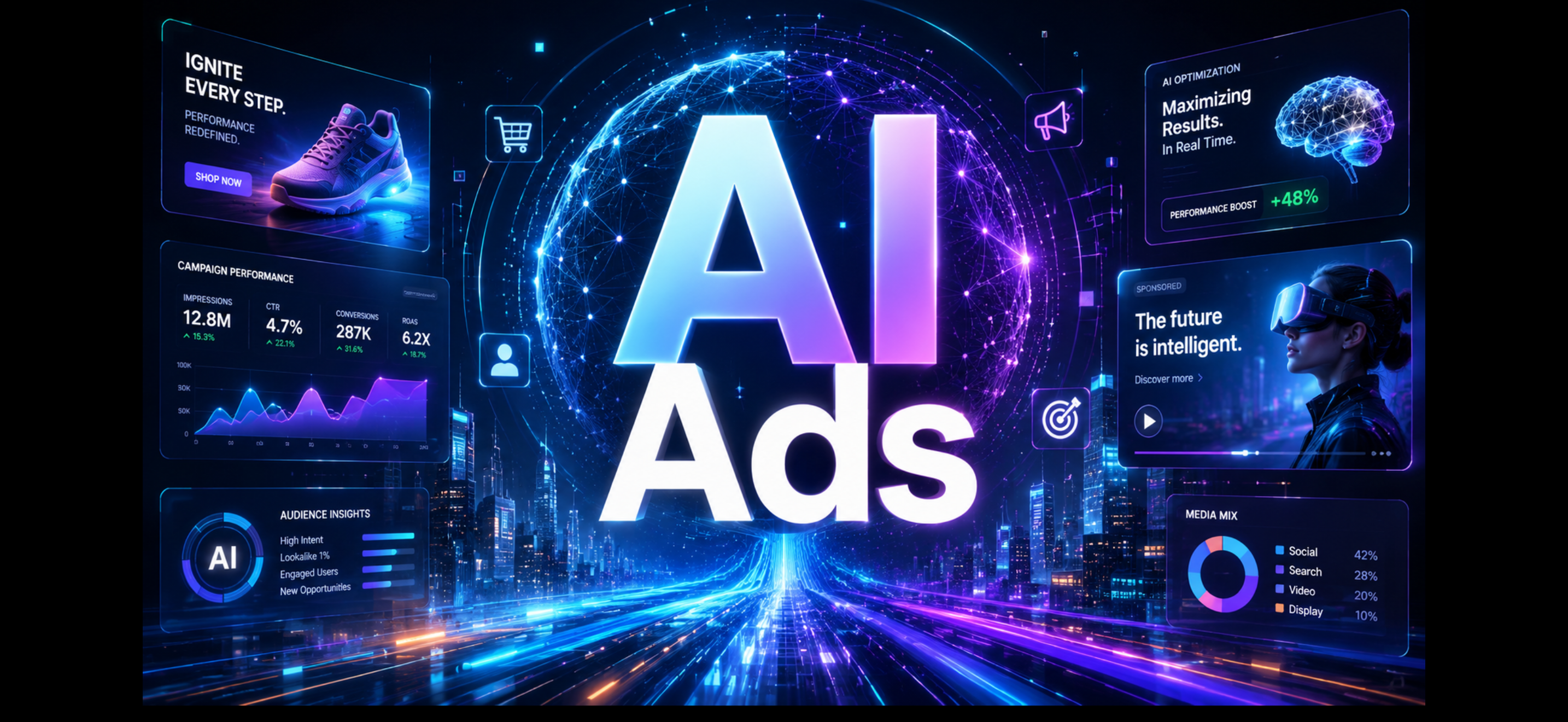
Advertising used to fight for the click. Today, it is beginning to fight for interpretation. This is the shift many people in the market still underestimate. For years, we understood digital advertising through a familiar model: a user enters a query, sees a list of links, compares websites, clicks on an option, and makes a decision. In that model, advertising lived around the user journey: next to search results, inside social feeds, before videos, between pages, inside banners and recommendation blocks. But artificial intelligence is changing the structure of decision-making itself. Users no longer always want to search through ten websites. They ask an AI system which bank to choose, which hotel to book, which CRM to use, where to open a company, which city is better for relocation, which clinic to trust, which expert to follow, which event to attend, or which country to invest in. And this is where the real shift happens: AI does not simply display information. It frames the decision. That is the new territory of advertising. AI Ads are not just ads created by artificial intelligence. They are ads inside an environment where artificial intelligence becomes the mediator between people, information, trust, and choice.
From Search Advertising To Decision Advertising
Search Ads were built around keywords. Social Ads were built around behavior and interests. AI Ads will be built around intent. The difference is fundamental. When someone types “best hotels in Dubai” into Google, an advertiser buys a search query. When someone scrolls through Instagram, an advertiser buys attention inside a behavioral feed. But when a user asks an AI assistant, “Where should I stay in Dubai for a business trip with meetings near DIFC?”, the system already understands the context, purpose, budget, location logic, and possible decision criteria. This is no longer just a keyword. This is a situation. And in this new environment, the winners will not be the brands that shout the loudest. The winners will be the brands that AI can correctly understand, explain, and connect with trust. In the past, brands asked, “How do we get to the top of Google?” Now the question is different: “How do we get into the shortlist of artificial intelligence?” That is a fundamental change.
Why AI Ads Will Become A Major Market
Every major advertising market appears where attention is concentrated. In the 2000s, attention moved to search engines, and Search Ads became one of the biggest advertising markets in the world. In the 2010s, attention moved to social networks, and Social Ads became the new growth engine. In the 2020s, attention is moving into AI interfaces: ChatGPT, Gemini, Perplexity, Copilot, AI Overviews, AI Mode, agentic systems, shopping assistants, and corporate AI assistants. People increasingly do not want to search. They want to receive an answer. And wherever there is an answer, monetization will follow. But unlike traditional advertising, AI Ads must operate within a very delicate trust boundary. If an AI answer starts to feel like a sales pitch, users lose confidence. That means the future of AI advertising cannot be loud, aggressive, or purely transactional. It has to be relevant, transparent, and useful. It is not just sponsored placement. It is sponsored relevance. This is why AI Ads are not only an advertising technology. They are a new discipline at the intersection of advertising, trust, reputation, data, content, and brand semantics.
The Main Asset Of The Future Is Being Correctly Understood By AI
In the old internet, a brand built a website, SEO, media presence, social channels, and performance campaigns. In the new internet, a brand must build an AI-readable identity. In other words, a brand must be as clear to machines as it is to humans. Who are you? What do you do? Who do you serve? What problems do you solve? Why should you be trusted? Where is that trust confirmed? Who cites you? Which sources connect you with your expertise? How should AI describe you in one paragraph? If a brand cannot answer these questions clearly, AI will interpret it randomly. And random interpretation is a new form of reputational risk. A company can spend millions on advertising, but if AI systems do not understand its positioning, confuse its category, lack reliable sources, or connect it with the wrong context, paid visibility will become weaker. In the AI environment, advertising does not exist separately from trust.
GEO And AI Ads Are Two Sides Of The Same Coin
I often speak about GEO — Generative Engine Optimization. For me, it is not simply a new acronym replacing SEO. It is a new logic of brand presence in a world where answers are generated by AI systems. SEO helped brands become discoverable. GEO helps brands become understandable. AI Ads add a paid layer to this new visibility. In simple terms, GEO is organic trust inside AI systems. AI Ads are paid visibility inside AI systems. Reputation Architecture is the layer that makes both believable. Without GEO, AI Ads risk becoming an expensive way to buy attention. Without reputation, AI Ads risk looking like intrusive promotion. Without clear semantics, AI may not understand where, when, or why to show a brand. That is why the future advertising strategy should not begin with a media budget. It should begin with one question: “Is our brand ready to be interpreted by artificial intelligence?”
What GYG.Agency Does In This New Reality
This is exactly where a new professional category is emerging: AI visibility, GEO, brand interpretation, and reputation architecture. This is the field we work in at GYG.Agency. We help brands become understandable for AI systems, so that ChatGPT, Gemini, Perplexity, Google AI, and future AI agents can correctly recognize a company, connect it with the right category, see supporting sources, and explain it to the market without distortion. For us, AI Ads are not simply a new advertising dashboard. They are the next layer of brand visibility. Before a brand starts buying attention inside AI environments, it must be properly described, structured, verified, and understood. Otherwise, advertising leads not to trust but to noise. This is why the work starts with an AI visibility audit, a semantic map, analysis of reputation signals, website structure, sources, founder profiles, expert publications, and the way AI systems already interpret the brand.
New Advertising Formats
AI Ads will not look only like banners. The market will likely develop through several formats. The first is sponsored answers: promoted blocks placed next to AI-generated responses. The second is sponsored next steps: actions such as “compare providers,” “request an audit,” “book a consultation,” or “get an estimate.” The third is sponsored follow-up questions: not just an ad, but a suggested next question that moves the user deeper into the decision journey. The fourth is AI shopping recommendations, where an AI assistant helps choose a product, service, hotel, ticket, bank, insurance plan, or software platform. The fifth is agentic ads, which may become the most powerful format. In the future, AI agents will not only answer questions. They will perform tasks: book, compare, buy, negotiate, filter, and choose suppliers. At that point, the main question will not be “Who bought the ad?” It will be “Who did the agent include in the shortlist?” This will change the economics of advertising. We are moving from advertising to people to advertising to people through machines.
Why Traditional Performance Marketing Will Not Disappear, But Will Become Insufficient
Clicks, conversions, CPA, ROAS — all of these will remain. But they will not be enough. AI environments will create new metrics. AI visibility share: how often a brand appears in AI answers across key categories. AI recommendation rate: how often AI includes the brand in a shortlist. Entity clarity: how clearly systems understand who the brand is and which category it belongs to. Source authority: which sources confirm the brand’s credibility. Answer sentiment: how AI describes the brand — positively, neutrally, doubtfully, inaccurately, or with outdated information. Decision proximity: how close the brand appears to the moment of purchase or choice. This is no longer just marketing. It is trust infrastructure. This is where GYG.Agency connects GEO, AEO, PR, authority signals, entity optimization, and reputation architecture into one system. AI does not see only one ad campaign. It sees the full context of a brand: who writes about it, how it is described, which sources confirm it, how clearly its category is defined, and whether its public image matches what the brand says about itself.
The Main Risk Is The Loss Of Trust
AI Ads can become a massive market. But they can also become toxic if platforms do not preserve transparency. Users must understand where the answer ends and where advertising begins. If sponsored content is disguised as a neutral recommendation, trust in AI interfaces will be damaged. And trust is the main capital of artificial intelligence. The best AI Ads of the future will not be the ones that manipulate the user. They will be the ones that appear at the right moment, with clear commercial labeling, and help the user take a useful next step. The new ethics of advertising will be simple: do not replace the answer; support the action.
What Brands Should Do Now
First, conduct an AI visibility audit. A brand needs to understand how ChatGPT, Gemini, Perplexity, Google AI, and other systems describe the company, its founders, products, and category. Second, build a semantic map. What questions does the audience ask? Which questions are informational? Which are commercial? Where does the moment of choice appear? Where should the brand become an organic answer, and where should it become a paid next step? Third, strengthen the sources. AI does not trust claims. It trusts confirmation. Brands need publications, author pages, interviews, expert content, structured data, independent mentions, and clear founder and company profiles. Fourth, rewrite pages not only for people but also for AI. A website must explain the brand clearly, consistently, and in a machine-readable way. Not only slogans, but category, use cases, proof, comparisons, FAQ, schema, sources, and authorship. Fifth, prepare AI Ads as a new performance layer. Not instead of Google Ads or Meta Ads, but on top of them — with a different logic. The point is not only to buy attention. The point is to enter the moment of interpretation.
Future Competition Will Be Invisible
The most interesting thing about AI Ads is that many companies will not even notice when they begin to lose. In the old search environment, you could open Google and see who ranked above you. In the AI environment, competition becomes less visible. One user receives one answer. Another user receives another. Context changes. Conversation history affects the next step. An AI agent may compare dozens of sources and show only three options. If your brand is not among those three options, you may never know that you lost the sale. This is a new dark zone of marketing. Companies will need not only advertising dashboards, but also AI visibility monitoring systems. They will need to check how their brand appears in answers, which categories it belongs to, which competitors appear next to it, which sources AI uses, which phrases are repeated, where errors exist, where reputation gaps appear, and where trust can be strengthened.
Africa, The Middle East, And Asia Can Gain An Advantage
There is another important point. Emerging markets do not have to repeat the entire path of traditional digital marketing. In Africa, MENA, and Asia, many companies can skip parts of the old SEO infrastructure and immediately start building AI-ready brands. This is especially important for banks, fintech, tourism, education, real estate, healthcare, government initiatives, investment zones, and cities that want to be visible to international audiences. In the future, a person may ask AI: “Where should I invest in Africa?”, “Which African fintech companies should I watch?”, “What is the best country in Asia for Web3 events?”, or “Which city is becoming the next innovation hub?” Answers to these questions will shape capital flows, tourism, reputation, and investment decisions. Countries, cities, and companies that build their AI-readable reputation early will have an advantage. For such markets, AI visibility may become not just a marketing task, but part of economic positioning.
AI Ads As A New Market Architecture
AI Ads are not just a new advertising format. They are the beginning of a new battle for interpretation. In the old internet, brands fought for space on the page. In the new internet, they will fight for space inside the answer. In the next stage, they will fight for space inside the decision of an AI agent. The winners will not be the loudest brands. The winners will be the clearest, most trusted, and best-supported brands. Artificial intelligence does not simply show advertising. It changes how people make decisions. If a brand wants to exist in this new reality, it must think beyond media budgets. It must think about semantics, reputation, machine readability, proof, and how AI will explain it to a person at the moment of choice. This is what we do at GYG.Agency: we help brands prepare for the new reality of AI Ads, GEO, and AI visibility. If your company wants to understand how AI systems see it, how to appear in future AI-generated answers, and how to become a brand that machines and people interpret in the same way, contact GYG.Agency.
Website: https://gyg.agency
Telegram: https://t.me/gyglobal
LinkedIn: https://www.linkedin.com/company/gygdigital
X: https://x.com/gygagency
Instagram: https://www.instagram.com/gyg.agency
The future of advertising is not a banner inside an answer. It is the right to be correctly understood at the moment when a decision is being formed.


